Forests and Reindeer in a Warming Climate

Wilder Forests for the Challenges of the Future

Forests and Reindeer in a Warming Climate

Wilder Forests for the Challenges of the Future

Background and project outline

Forests in northern Sweden are facing major changes. A warming climate is increasing the risk of drought, storm damage and other disturbances. At the same time, there is a growing need to consider biodiversity, conservation values and reindeer husbandry. This raises questions about how the forests of the future can become more diverse, resilient and better equipped to adapt to change.

Through this project, Rewilding Sweden brings together forest owners, researchers, practitioners and people with expertise in reindeer husbandry to explore different ways forward. We aim to increase understanding of how diversity in tree species, age and forest structure can influence forest resilience in a changing climate, and the role that nature-based forestry practices and natural processes can play.

The project’s training activities cover a range of forest management methods and approaches, including site-adapted management, measures to improve storm resilience and a shift towards more diverse forestry practices overall. Working alongside experts with extensive knowledge and experience, we explore different approaches to sustainable forestry and close-to-nature forest management, including continuous cover forestry and alternatives to clear-cutting. We examine the opportunities these approaches offer, as well as the ecological, practical and economic trade-offs involved.

The aim is not to promote a single way forward, but to equip forest owners and other stakeholders with greater knowledge and a stronger basis for making informed decisions about the forests of the future.

Funding:

 

Swedish Forest Agency
EU


Are you a forest owner interested in taking part in the project?

Do you own forest land in Västerbotten or Norrbotten and want to learn more about close-to-nature or continuous cover forestry, increasing forest diversity or adapting forest management to a changing climate? If so, you are welcome to take part in the project’s courses, field visits and webinars.

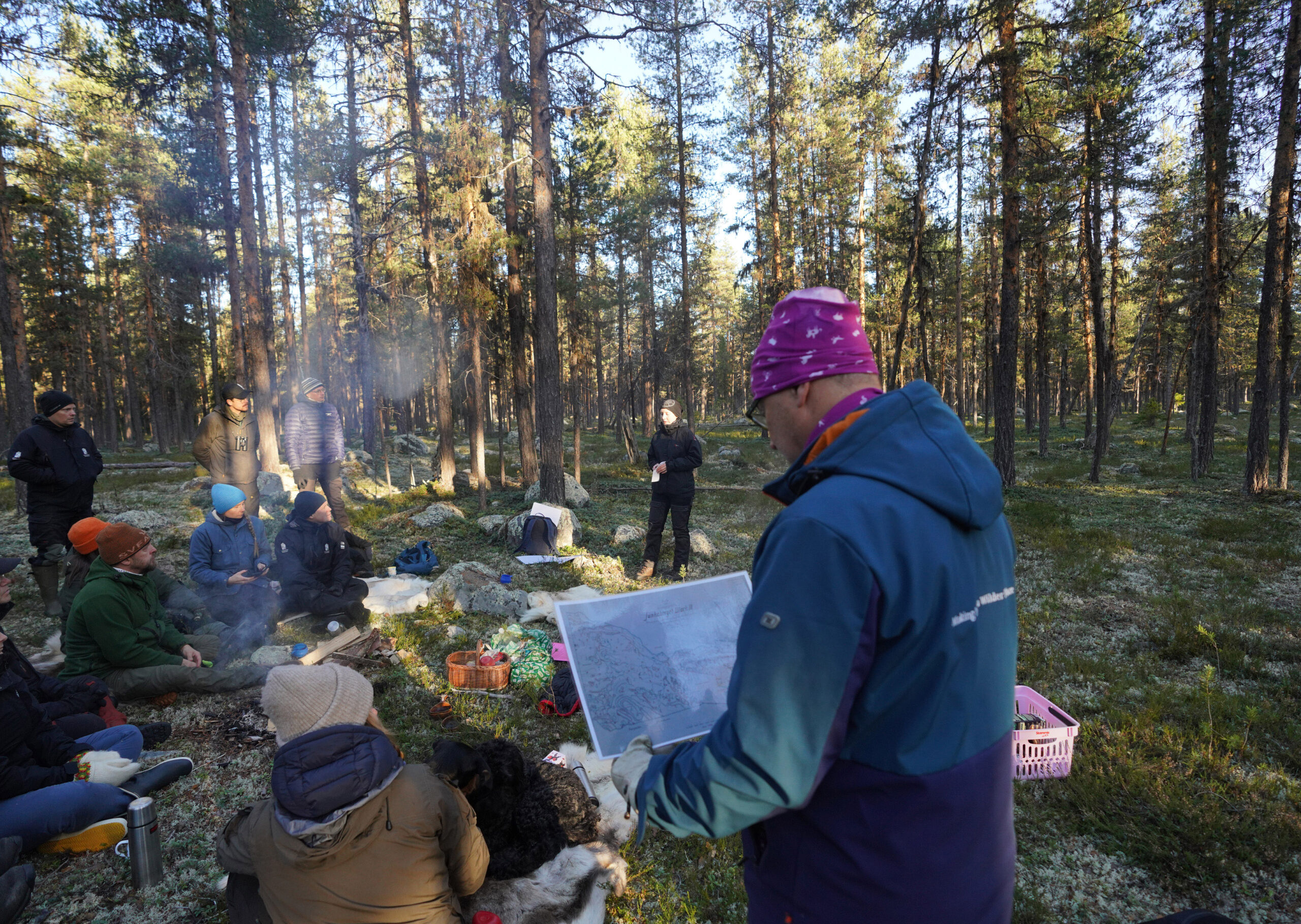
We are also looking for forest owners interested in hosting a practical field session on their land. Together with experts and other participants, we can explore the characteristics of your forest, different management options, conservation values and considerations for reindeer grazing. We will plan the session together with you, taking into account your preferences and the specific conditions of your forest.

Would you like to find out more or register your interest? Contact project manager Anders Granér.

Contact usRegister here


Anders Granér
Project Manager

Prerequisites

The Challenge

Through this project, we bring together forest owners, researchers, practitioners and people with expertise in reindeer husbandry to share experiences and learn from one another.

Through courses combining theory and practical field sessions, as well as webinars, participants gain knowledge about site-adapted forest management, increasing forest diversity, storm risks, and continuous cover and close-to-nature forestry practices. We also explore how conservation values and reindeer grazing can be taken into account when making forest management decisions.

The aim is not to promote a single way forward. Instead, we want to equip participants with greater knowledge and a stronger basis for deciding which approaches are best suited to their own forests. In this way, the project aims to contribute to more diverse and resilient forests, with greater space for nature and a better capacity to meet the challenges of the future.

Our Approach

#1. Site-adapted management, storm resilience and increased diversity

Forests differ in their characteristics and therefore require different management approaches. Through the project, we explore site-specific conditions and how tree species selection, forest structure and levels of diversity can influence both resilience and conservation values.

We also examine how forests can be made less vulnerable to storms and other disturbances, and the role that sustainable, close-to-nature forestry practices, including alternatives to clear-cutting, can play. Consideration of reindeer grazing and reindeer husbandry is a recurring theme throughout.

#2. Courses, field visits and webinars

Knowledge is shared through twelve two-day courses held at different locations across Västerbotten and Norrbotten, combining theoretical learning with discussions and practical examples in the field.

The project also includes webinars featuring researchers, practitioners and other experienced experts. Participants have the opportunity to ask questions, share experiences and discuss different forest management options based on their own circumstances. A practical written guide to forest management methods will also be developed to support participants.

  • This field is for validation purposes and should be left unchanged.