
Many of northern Sweden’s rivers still bear traces of the timber-floating era. By returning boulders, dead wood, gravel, and sand, we give the water back its natural variation, its power, and its ecological connection with the surrounding landscape. The goal is for the Nordic Taiga’s rivers to become living, dynamic, and wild once again.
How we rewild the taiga’s rivers
Forestry has long been one of Sweden’s most important industries. In the early 20th century, before forest roads were widely developed, streams and rivers were used as transport routes for timber. To make timber floating easier, almost all rivers in northern Sweden were systematically cleared of boulders and other natural structures. Before 1950, this was done by hand, sometimes with dynamite. After the Second World War, these interventions intensified as bulldozers replaced manual labour. The result was straightened, monotonous, and ecologically depleted rivers, where the connection between land and water was largely broken.
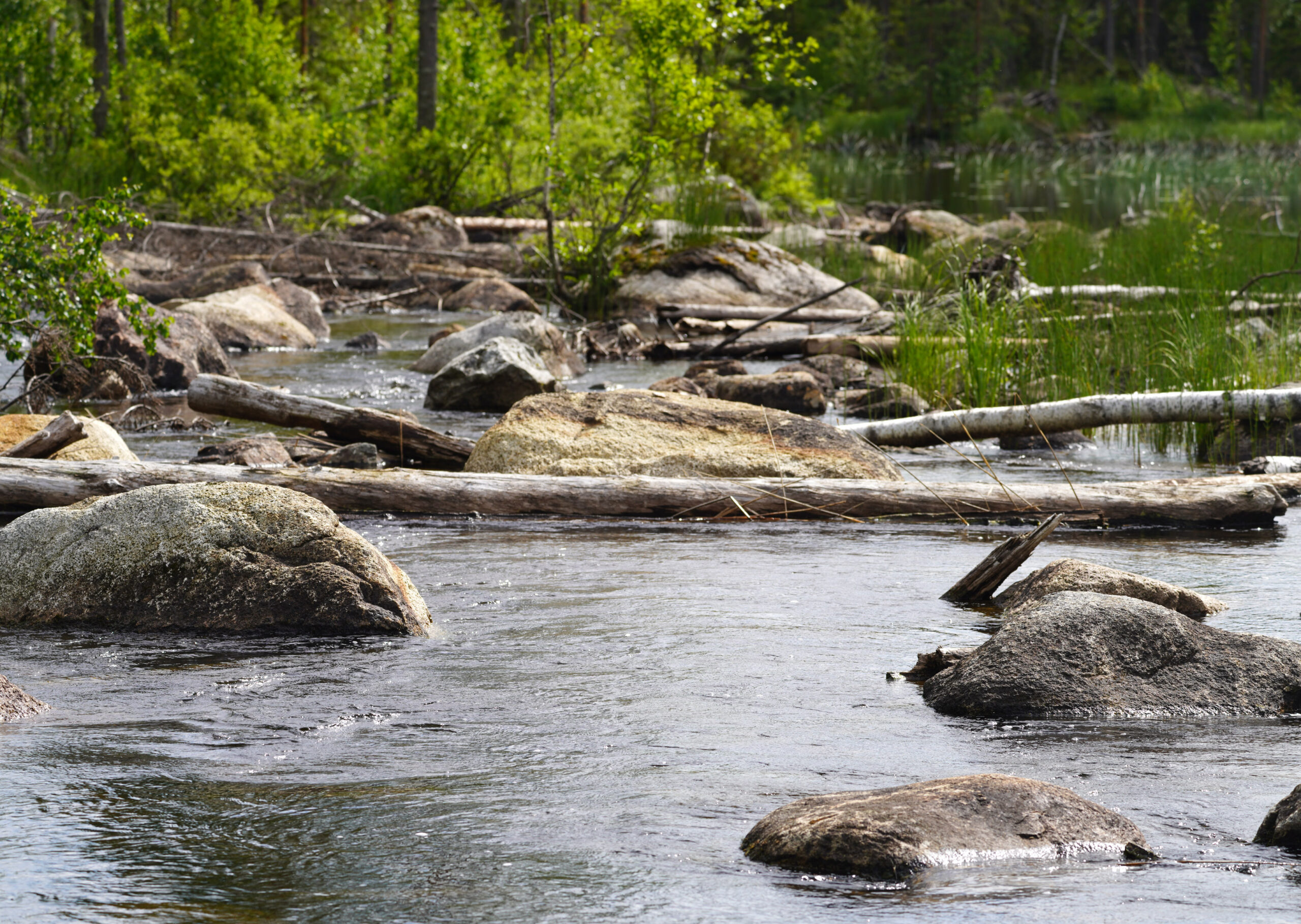
By rebuilding the natural structure of rivers with boulders, dead wood, gravel, and sand, we create environments where animal and plant life can develop again. We slow water runoff, raise base levels, and restore the connection between the water and the riparian zones. Deep pools are created where fine sediment and organic material, such as leaves and plant matter, can accumulate. This strengthens the foundation of the food web in boreal water systems and creates important places where stream-dwelling fish can rest, forage, and find shelter. When rapids, boulder-rich sections, and varied streambeds are restored, the river’s natural variation increases. In some stretches, gravel and sand also need to be returned, as this material was washed away while the river was cleared and channelised. Where fish populations have become locally extinct, juveniles from local or regionally adapted genetic strains can be reintroduced. A river that can once again overflow during high flows slows the energy of the water, reduces the risk of harmful downstream flooding, and can create new swamp forest habitats.
With our restoration measures, we are not trying to recreate a static historical state. We are giving the river back the conditions, power, and freedom it needs to rewild itself.


The general challenges
In a straightened river with strong flow, fine sediment and organic material do not accumulate, which greatly reduces habitats and food availability for leaf-eating aquatic insect larvae, the first link in the boreal aquatic food web. Without larger stones, backwaters, or branches, the important autumn leaves are washed downstream. Flat, cleared streambeds offer few holding places for fish and little variation in turbulence, resulting in homogeneous oxygenation. Stone embankments cut off nutrient exchange between water and land. Without leaves, ecosystems become dependent on bottom-growing algae for energy, but at northern latitudes algal growth is limited by low sunlight and cold temperatures, making food availability naturally low for insects that graze algae from stones. Some species adapted to strong currents, such as filter-feeding blackfly larvae (Simuliidae), can still survive, but they depend on organic particles from the missing leaf-eaters. With fewer insects, fish populations decline, and without regular flooding many natural riparian plants, including deciduous trees, are disadvantaged, which also affects birds. The entire ecosystem in and around the water is degraded.
Solutions
Phase 1: Restoring structural complexity
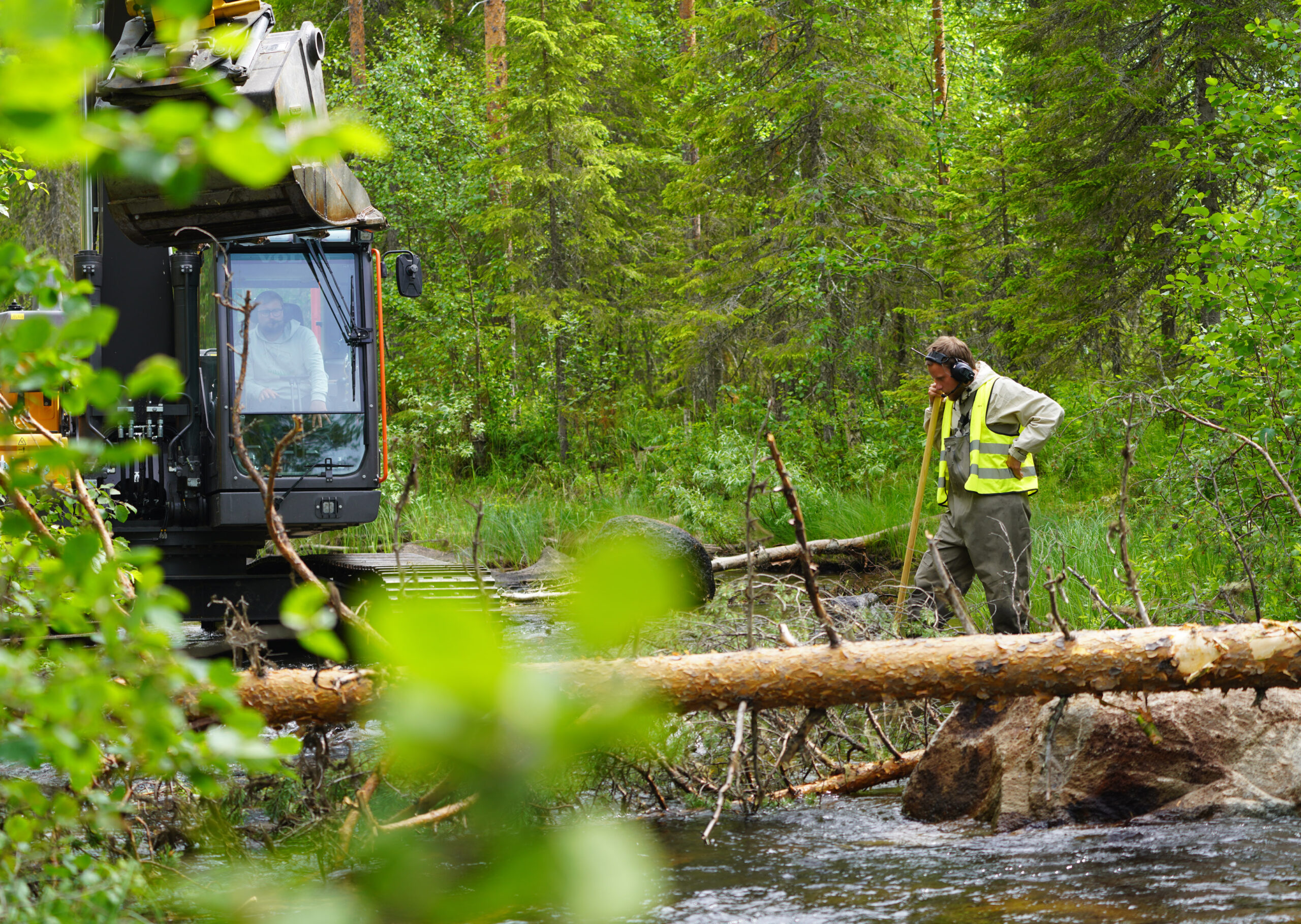
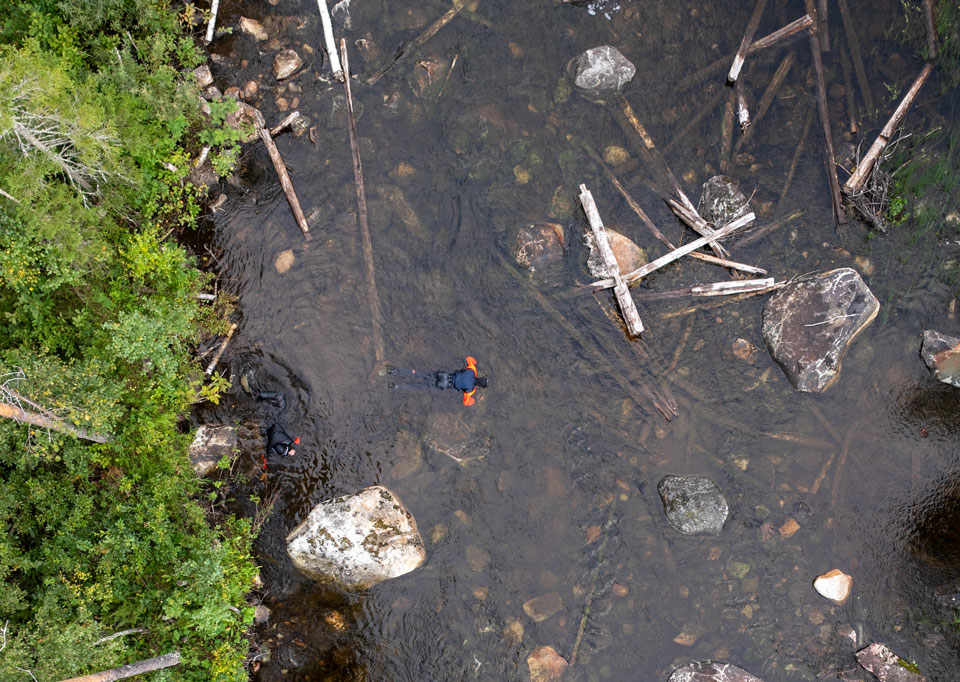
The form of a river is shaped by gradient, water flow, and soil type. In fine-grained soils and at low gradients, meandering channels often develop, while rivers in coarse, stony soils that resist erosion tend to have a straighter and more stable form. Machine-based restoration efforts are therefore mainly directed at these robust stretches, where the river cannot recreate the lost structure on its own.
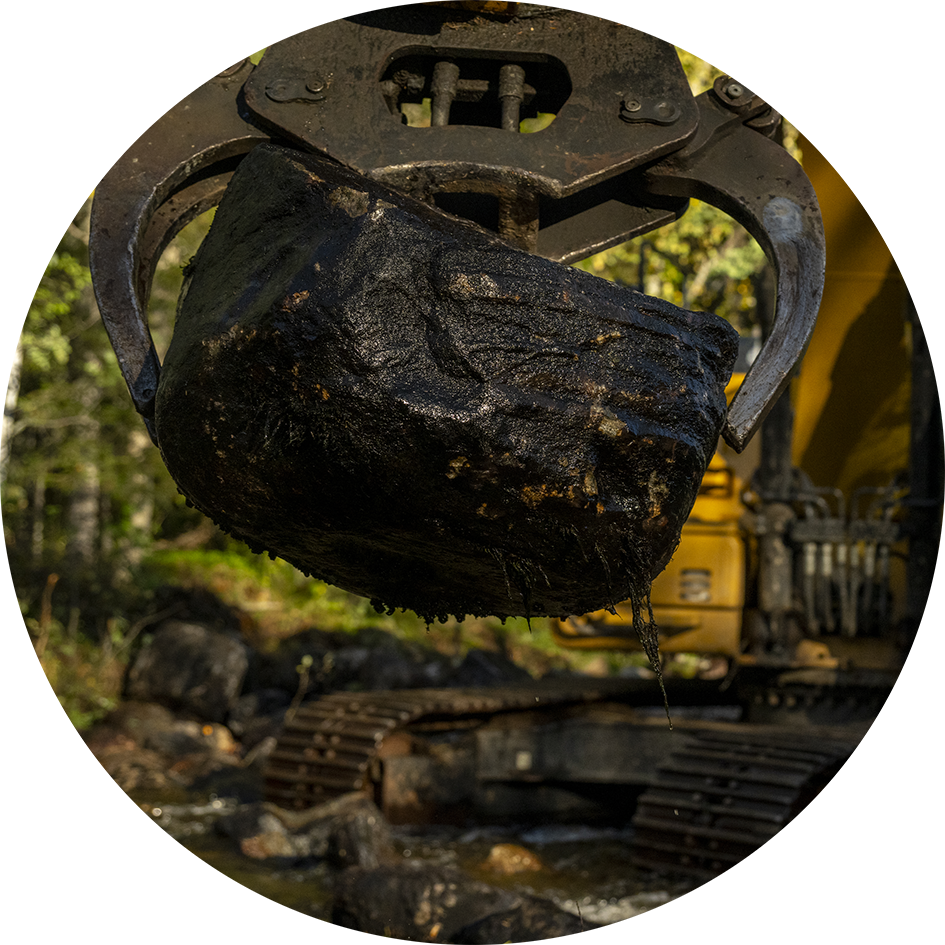
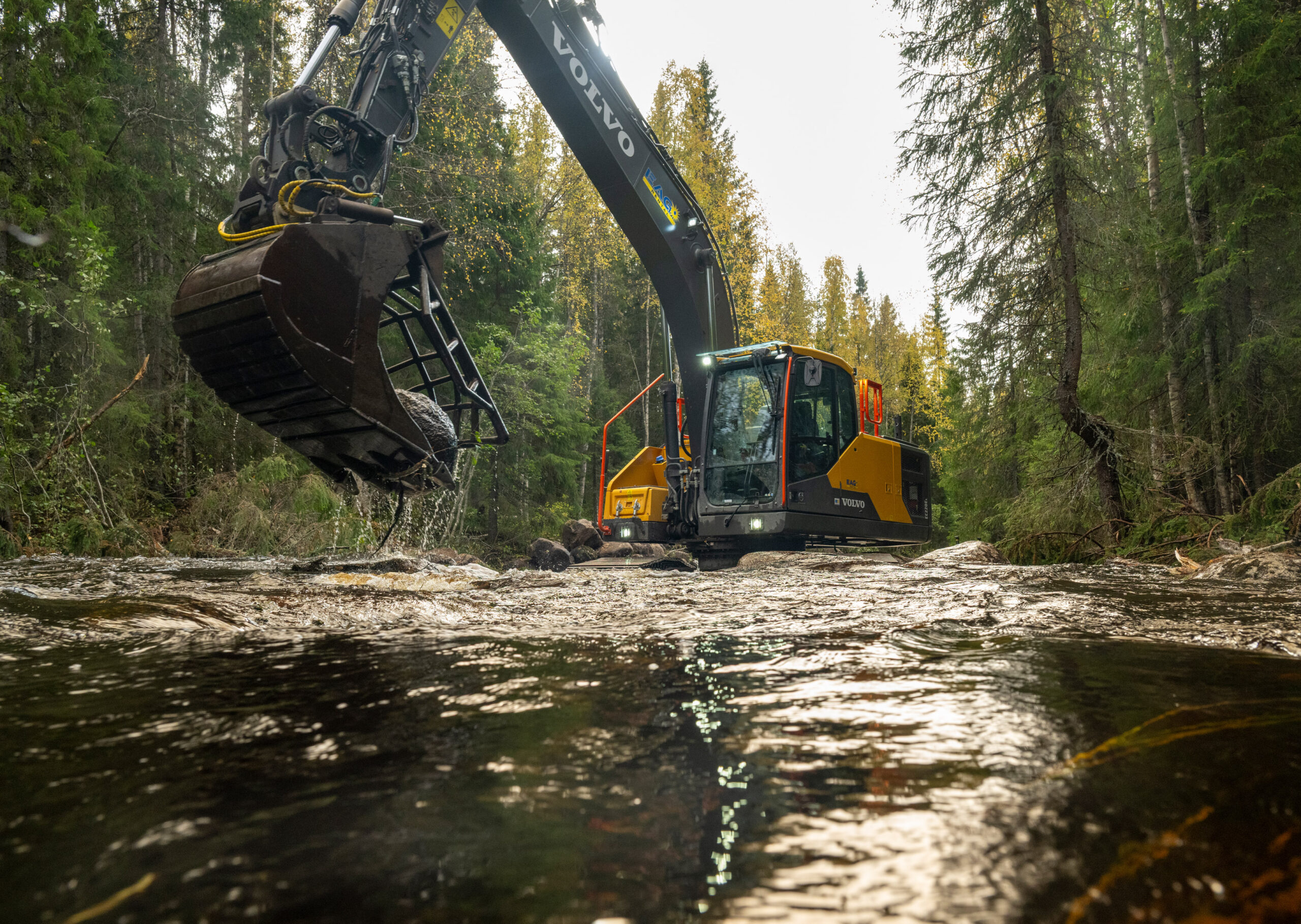
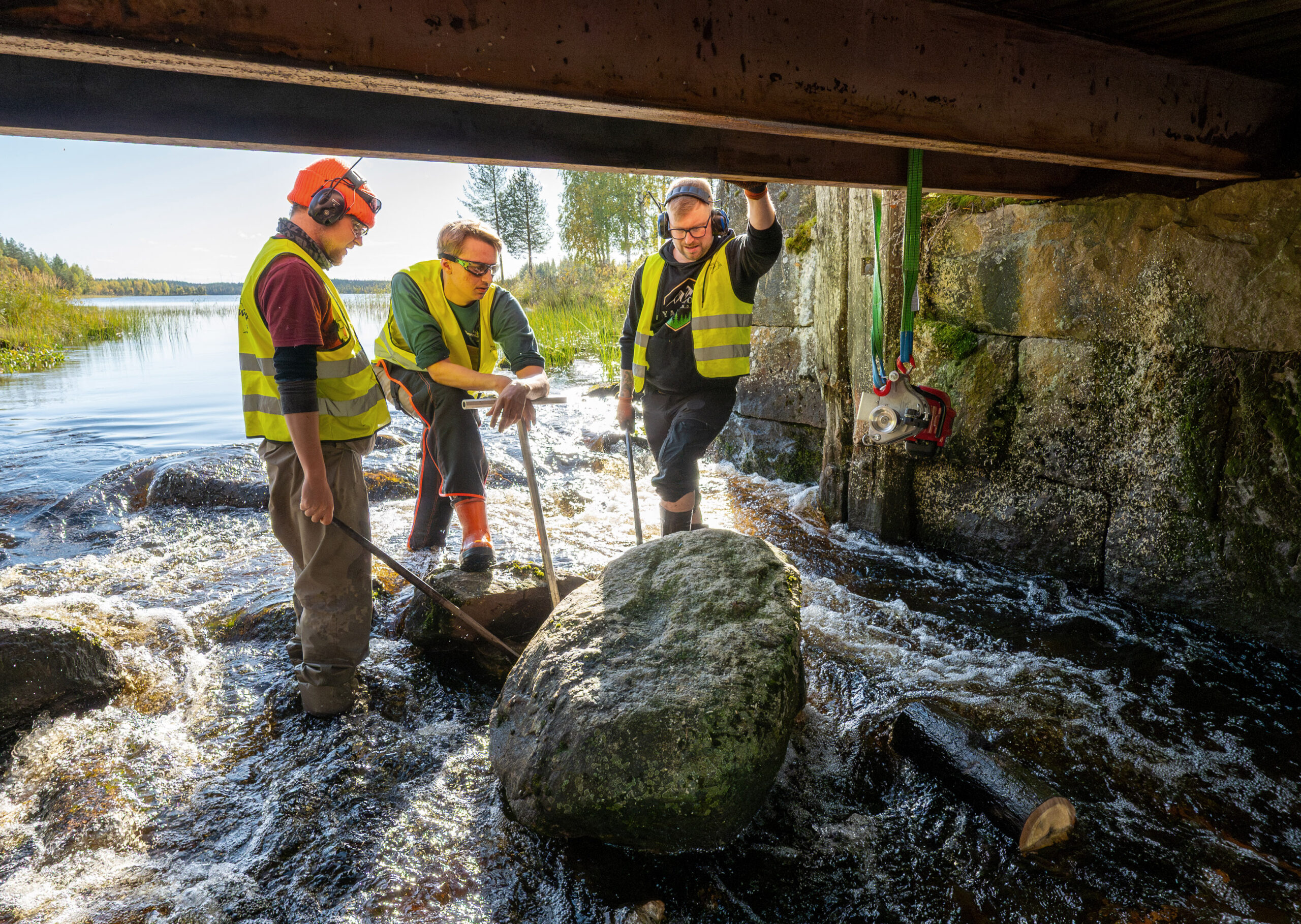
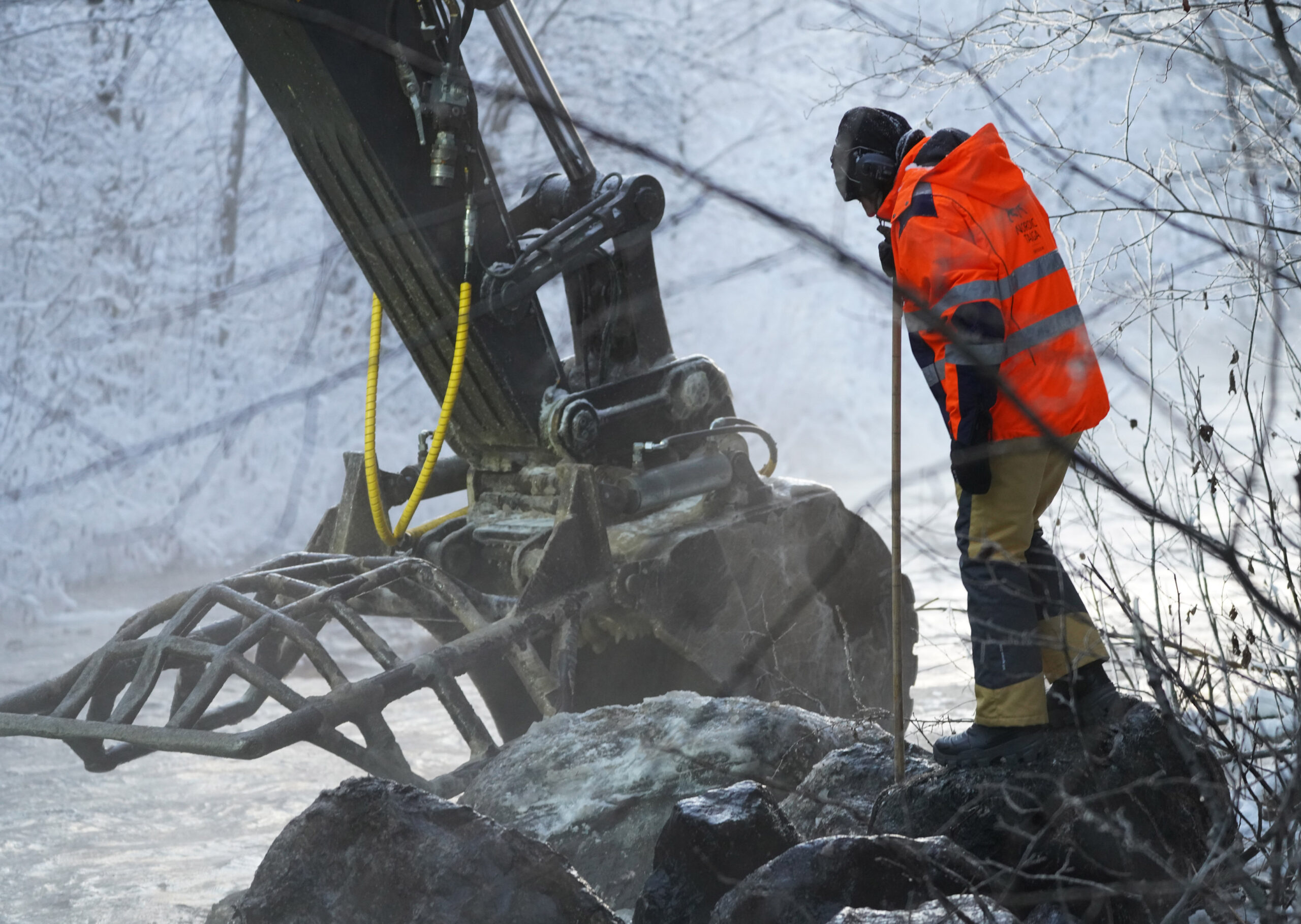
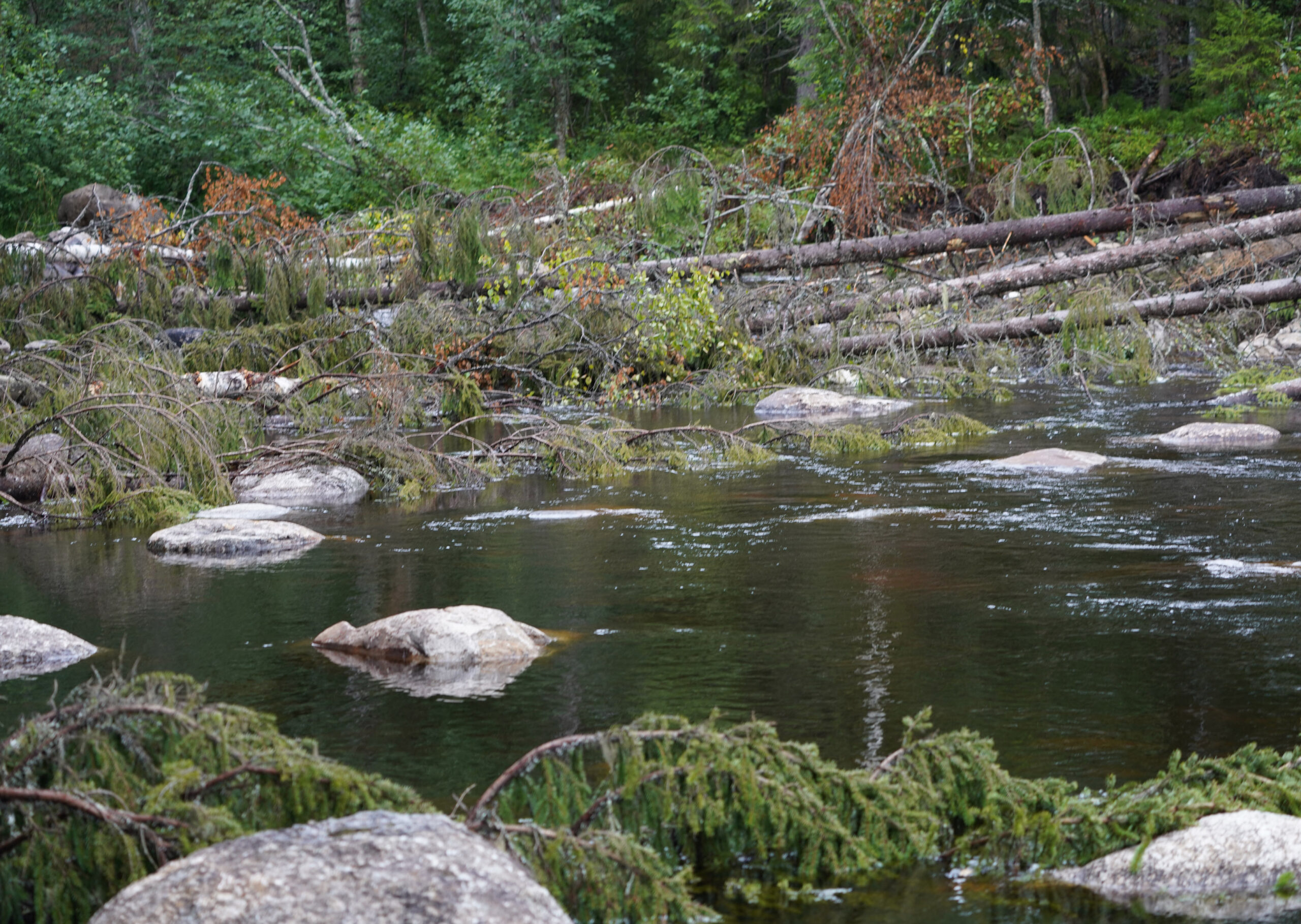
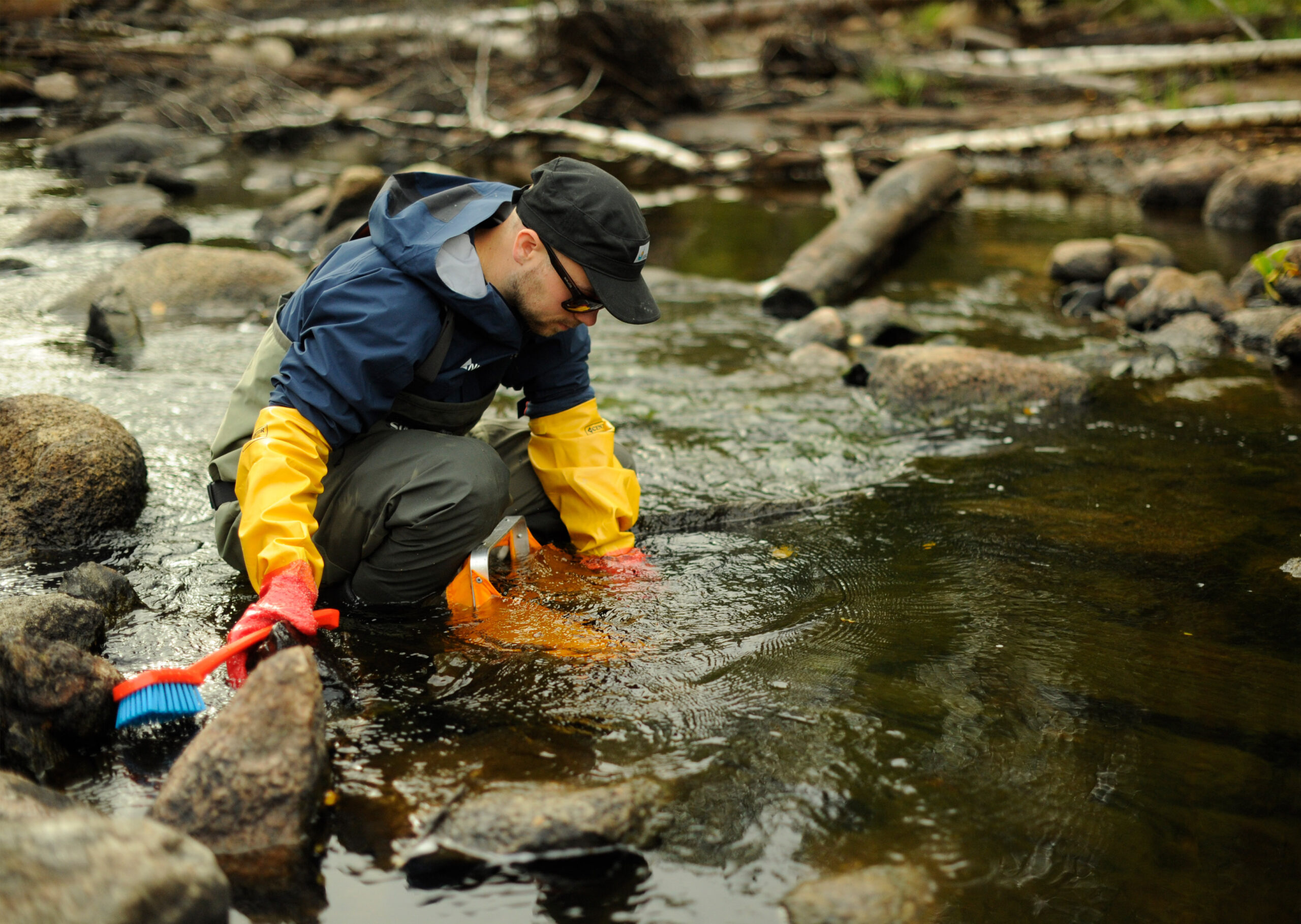
Boulders that were removed during the timber-floating era are returned to create greater variation in width, depth, and streambed structure. This slows the rate of runoff and increases the retention of gravel, sand, and organic material, which in turn creates habitats and food for aquatic species. Structural variation is also enhanced with dead wood, mainly by felling conifers into or near the river. The trees decompose slowly and provide long-lasting ecological effects, without reducing the annual input of leaves from the riparian zone.
Phase 2: Adding fine-grained sediment sizes
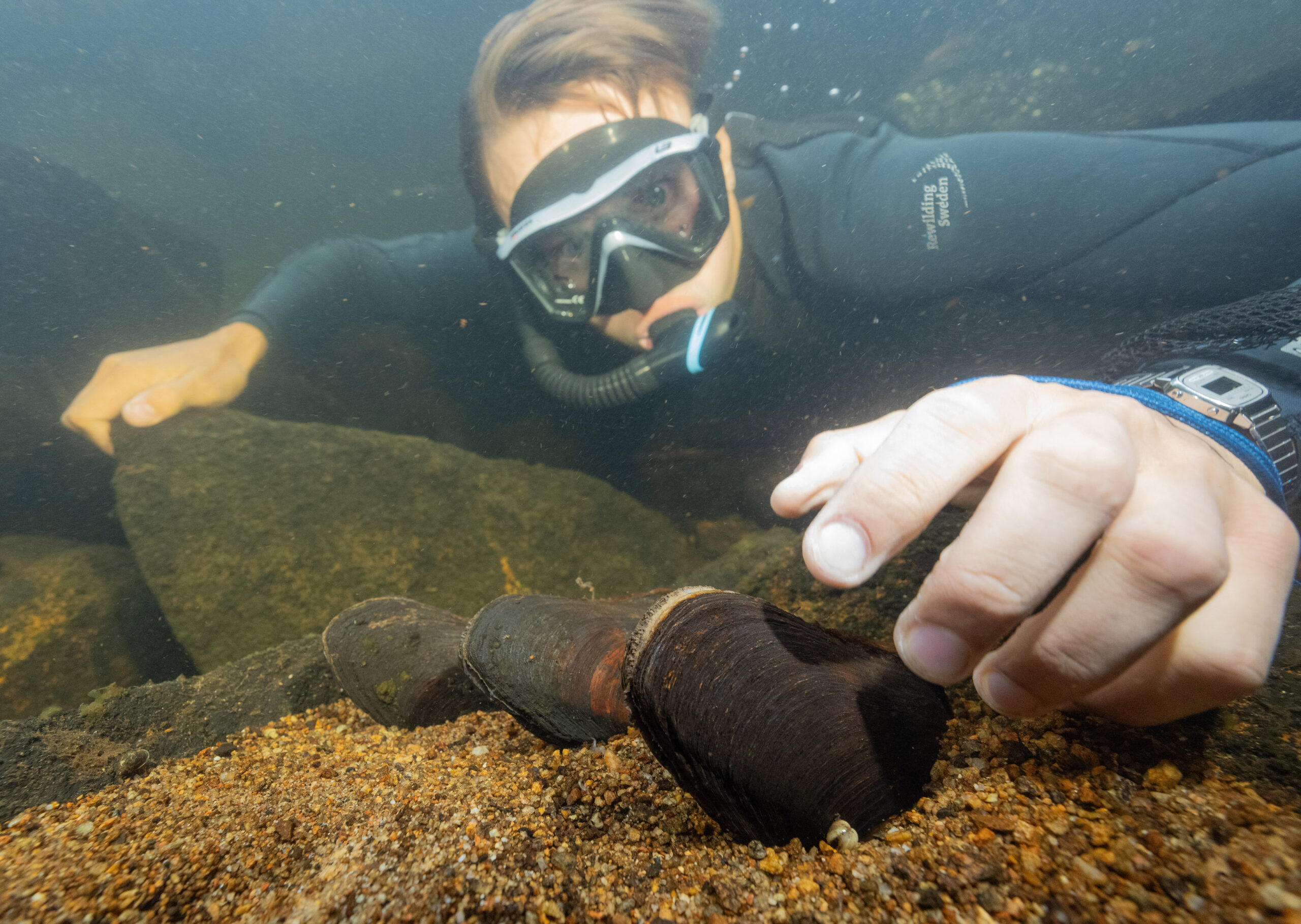
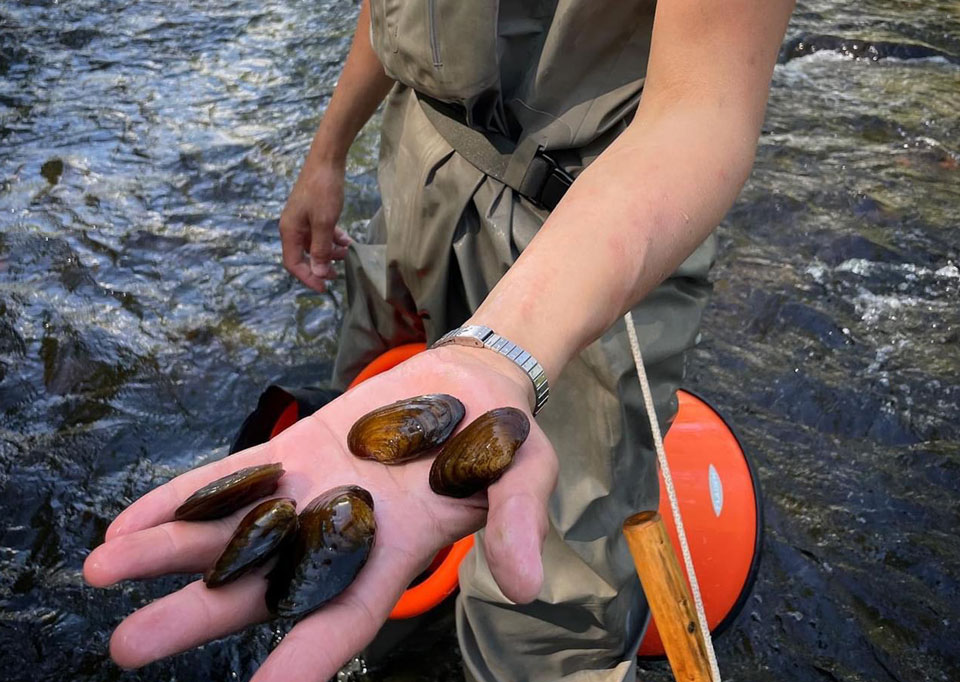
In rivers that flow through coarse till, the natural sediment mix consists not only of boulders, but also of sand and gravel. These smaller particles create important habitats for aquatic insect larvae, serve as spawning grounds for salmonids, and provide substrate for freshwater pearl mussels. When stones are cleared from a river, water velocity increases, often causing sand and gravel to be washed away. As a result, many underwater habitats that species depend on also disappear. Once the coarse structure has been restored, but sand and gravel are still missing, this material can be added afterwards. With a helicopter, this can be done quickly even in hard-to-reach areas: one trip often takes 2 to 5 minutes, and each load carries around 800 kilograms. In a single day, large amounts of material can be added, work that would otherwise require several seasons by hand.
This measure recreates habitats and spawning grounds, and helps restore the river’s natural base level and depth. Sand and gravel fill the gaps between the returned stones, where water might otherwise disappear into the streambed. This strengthens the connection between the river and the surrounding land, benefiting life both in the water and on land.
Phase 3: Releasing fish fry
Once the river’s habitats have been restored, the next step may be to help fish return. In some rivers, local trout populations are so weak that they can no longer re-establish themselves on their own, even after spawning grounds, shelter, and varied current habitats have been recreated.
In these cases, trout fry from local genetic material can be released at carefully selected sites where the right conditions have been created. The goal is to build wild and viable populations that, over time, can reproduce on their own. The return of trout strengthens the entire ecosystem and is particularly important for species such as the freshwater pearl mussel, whose life cycle depends on young salmonids.
Expected response
We expect the ecosystem response to occur in three stages:
◆ Stage 1: Direct effects
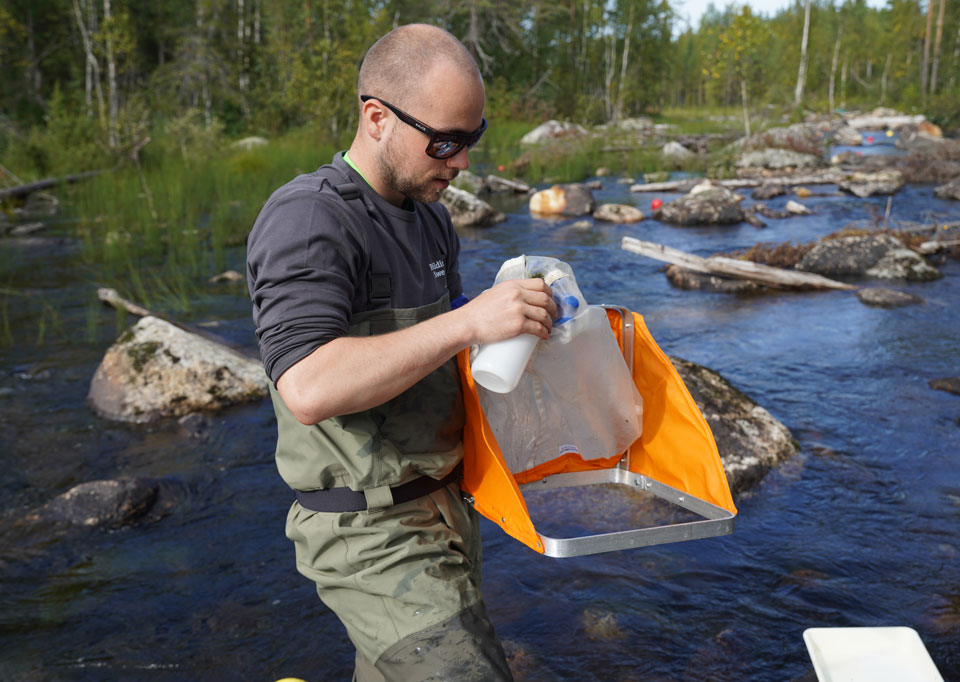
Increased structural complexity; reduced flow velocity and greater variation in oxygenation; more dead wood and increased accumulation of organic material.
◆ Stage 2: Follow-on effects
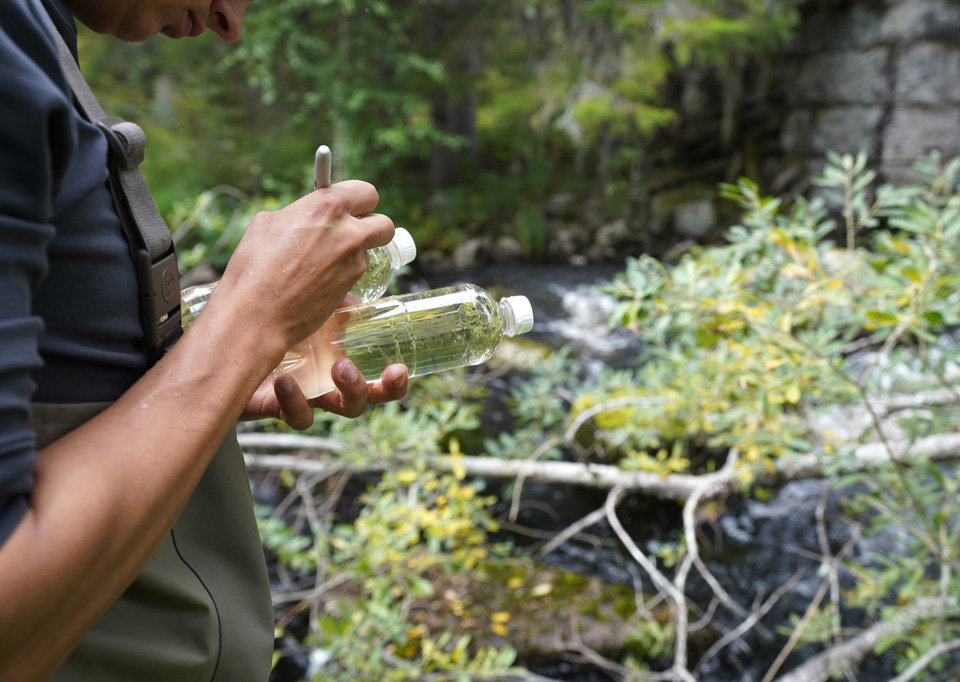
Improved functional β-diversity among benthic invertebrates, caused by greater habitat variation; increased occurrence of leaf-shredding insects thanks to larger amounts of organic material; more species living in sand and gravel beds; stronger connections between aquatic and terrestrial ecosystems through increased water retention.
◆ Stage 3: Long-term goal (also influenced by other factors in the landscape)
Increased fish occurrence in the rivers; richer birdlife along the banks as a result of more natural flooding and more swamp forest habitats.