
In the Nordic taiga, we work to restore the forests’ natural diversity, resilience, and function. Through restoration, rewetting, and stronger ecological connections, we give species and habitats better conditions to recover and rewild.
How we are making the taiga forests wilder
A central part of our focus in the Nordic Taiga lies within Wilder forests. Our efforts aim to help forests regain their natural diversity and resilience. We work with everything from veteranisation, selective thinning, rewetting, burning, the addition of coarse dead wood, the reintroduction of mosses, to passive rewilding. An important part of this is supporting deciduous trees, which are largely missing from the taiga forests. This is done by thinning out planted conifers, blocking drainage ditches, and restoring the connection between watercourses and floodplains. These efforts benefit species such as the white-backed woodpecker, reindeer, ground lichens, amphibians, and rare wood-living beetles. With funding from the Swedish Postcode Lottery Foundation, we began restoring deciduous forests along the Ume River in 2022, in the south-eastern part of the Vindelälven-Juhttátahkka Biosphere Reserve, together with Umeå Municipality. At the same time, we launched efforts linked to the creation of reindeer grazing corridors together with Sámi villages in Klippen, in the north-western part of the biosphere reserve. Thanks to support from private donors and partners, we have since been able to expand the work, with the number of rewilded areas steadily increasing while being connected to a growing network of corridors, important dispersal routes for plants and animals.
Our work does not stop at individual sites. By restoring natural processes across entire waterscapes, we create the conditions for forests, watercourses, and species to develop together. With continued support, we can scale up and accelerate nature’s recovery, and give space to a wilder, more resilient forest landscape.
Prerequisites and rewilding approach
The challenge
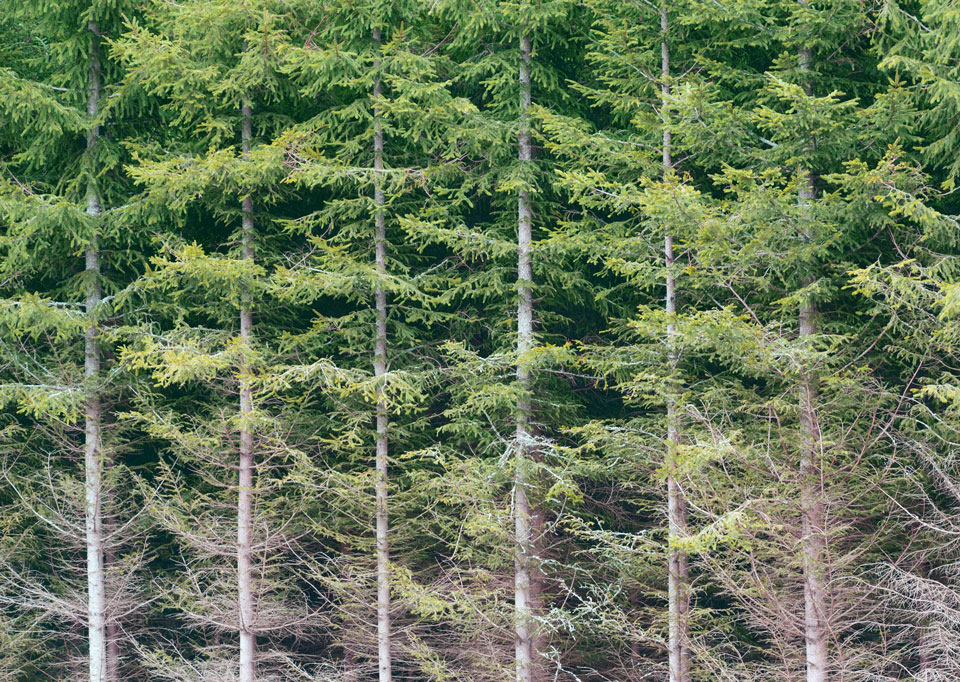
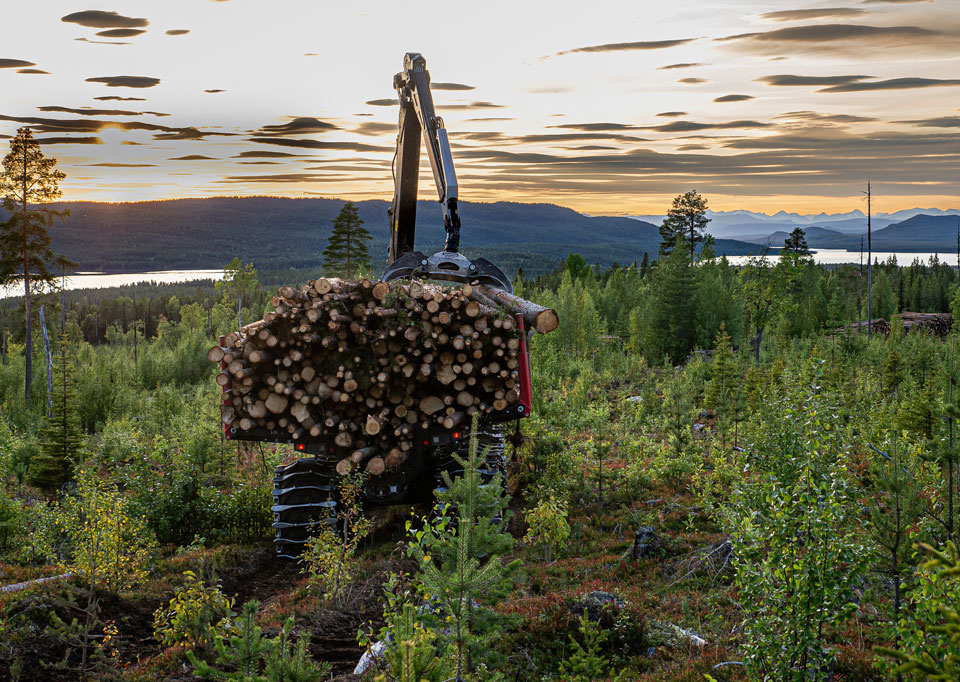
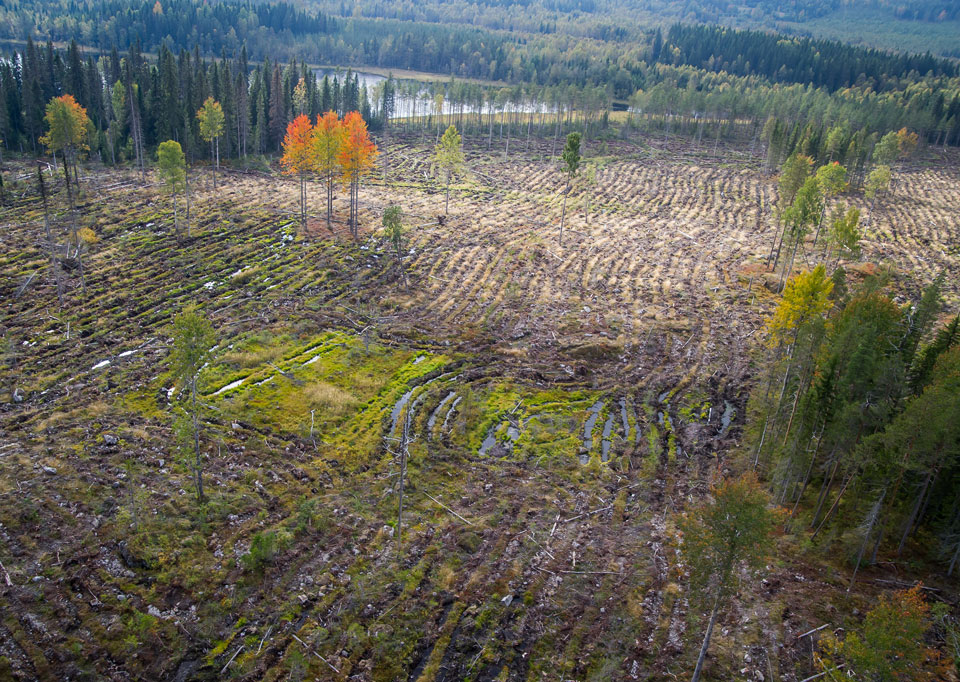
The Nordic Taiga is dominated by planted forests, clear-cut with regular time intervals. These uniform; same-age conifer stands replace diverse natural forests. Deciduous trees are routinely removed, and dense canopies block sunlight, limiting understory vegetation like ground lichens, vital for reindeer winter grazing. Intensive ditching drains soils, while heavy machinery compacts the ground, accelerating erosion and degrading soil quality. Clear-cutting affects fungal community and depletes below-ground carbon storage, where over 80% of boreal carbon is held. The lack of old-grown, dead and deciduous trees threatens many species of fungi, insects, birds, and more. Less leaf litter in rivers disrupts aquatic ecosystems. Conifer dominance increases, soil acidity and drought and fire risk. Fragmented landscapes isolate wildlife, making survival harder for keystone species. Without structural and species diversity, planted forests grow more vulnerable to pests and environmental change.
The solution
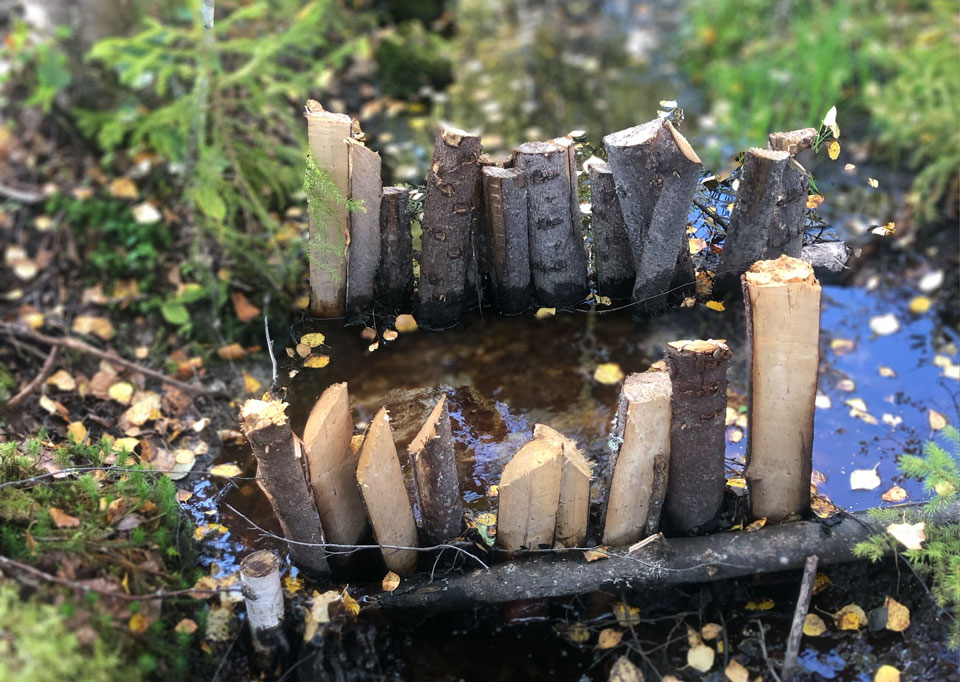
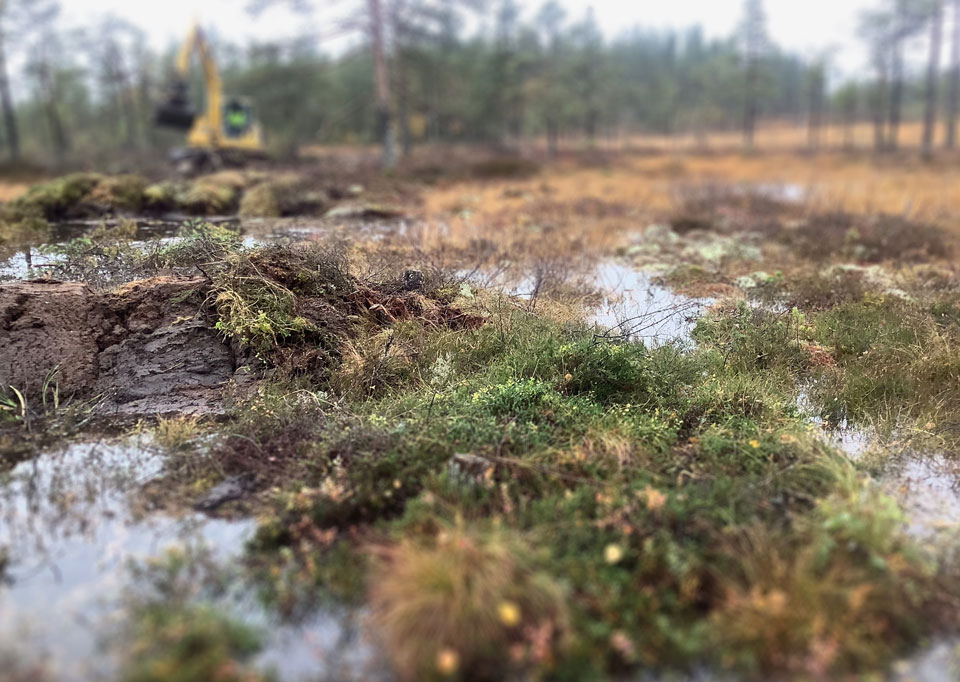
#1: Restoring forest soils by blocking and filling ditches
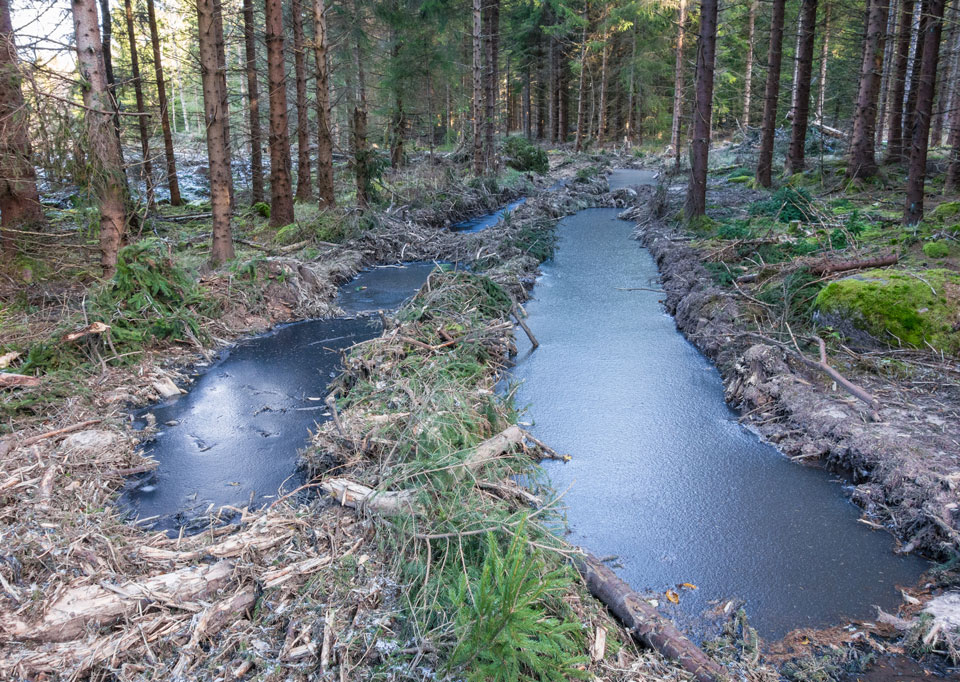
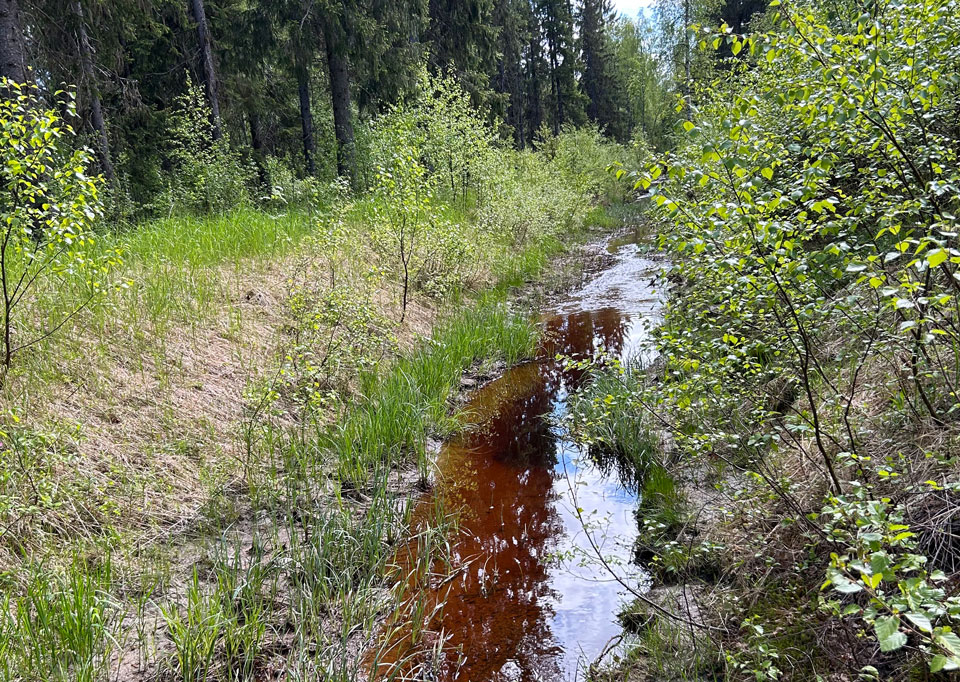
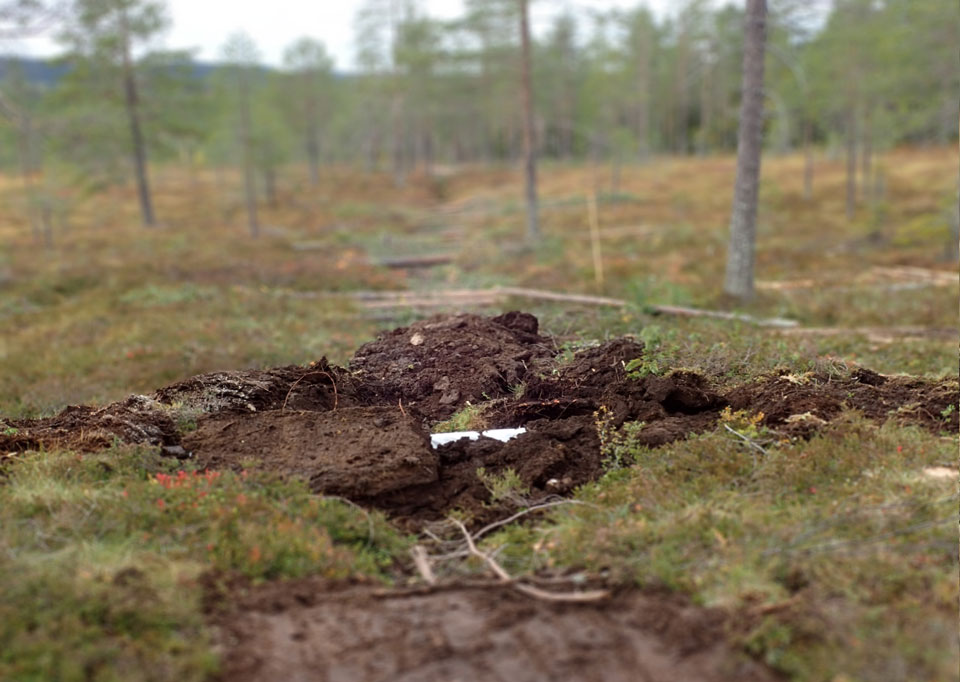
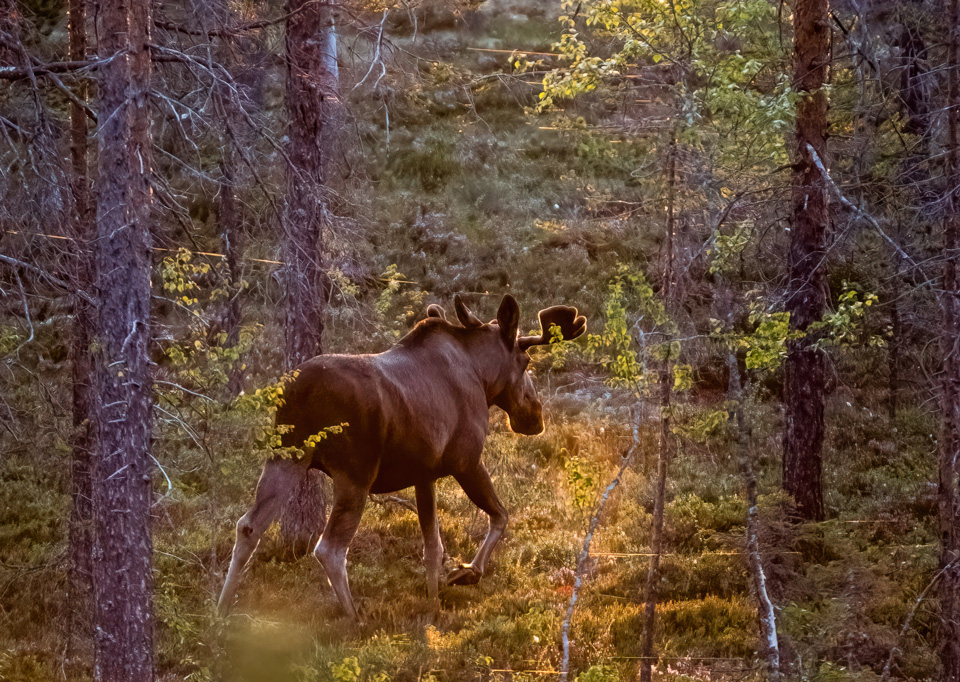
To facilitate rewilding and reverse ecosystem degradation from forest ditching, Rewilding Sweden often starts by restoring the hydrological balance – plugging ditches, rewetting soils, and revitalizing wetlands. This restores soil moisture, enabling flora, mosses, and lichens to return, supporting amphibians, insects, birds, and key grazers like Eurasian elk and reindeer. Rewetting further enhances tree diversity by promoting deciduous regeneration, improving water retention, and benefiting soil health and ecosystem stability. Filled ditches reduce silt erosion to rivers and streams, enhancing water quality and habitat for fish, freshwater pearl mussels, and aquatic insect larvae.
A sponge-like landscape mitigates threats to human livelihoods by reducing flood risks and acting as a natural firebreak. Restoring lost water systems fosters a healthier boreal ecosystem – one that regains diversity, resilience, and the ability to rewild naturally.
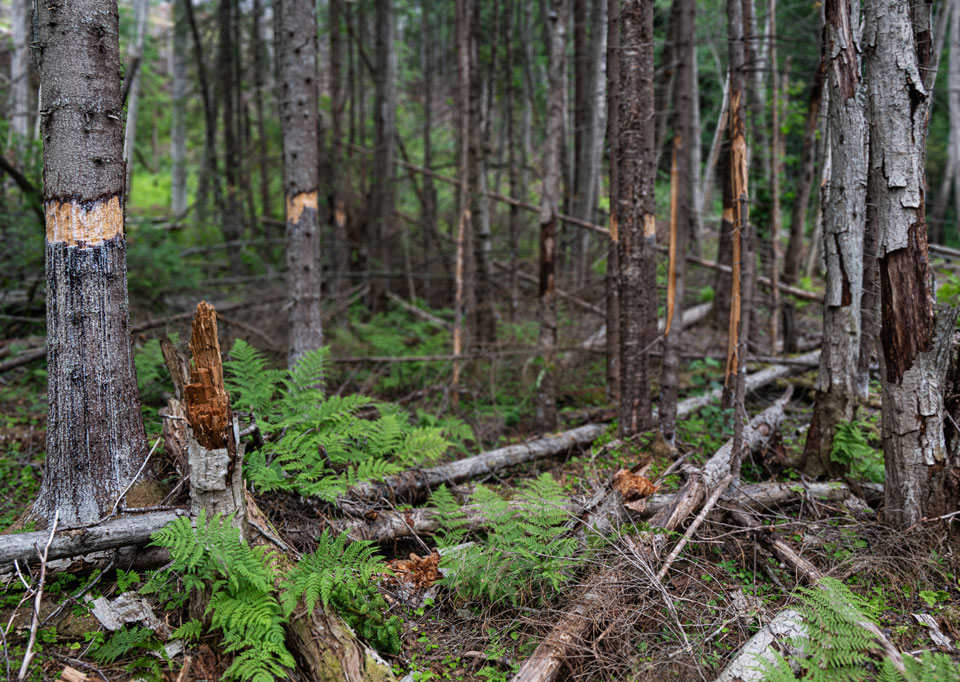
#2: Artificially creating age diversity and dead wood
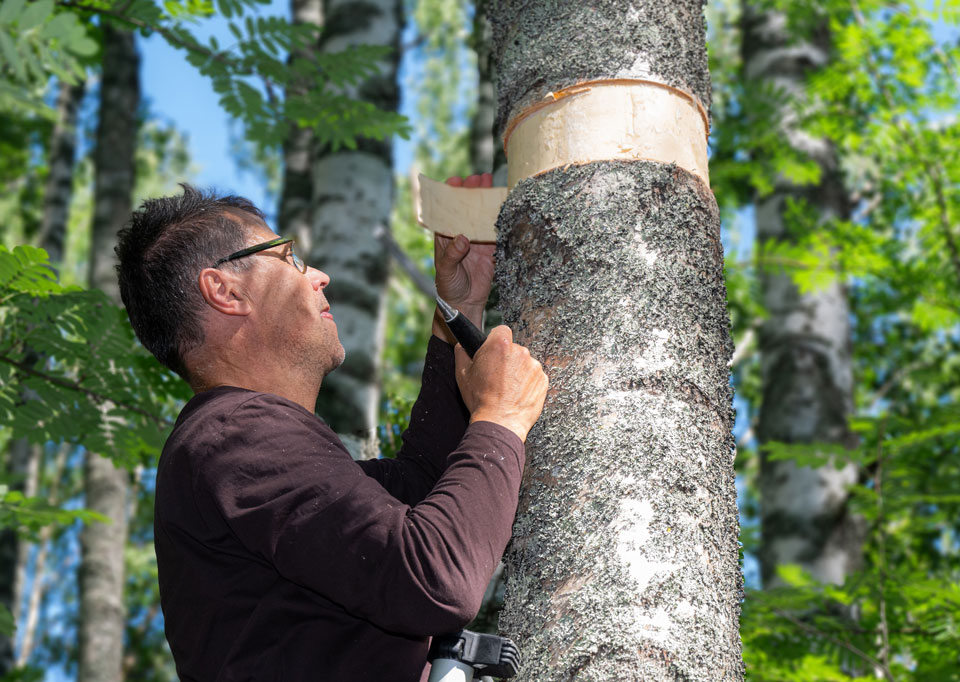
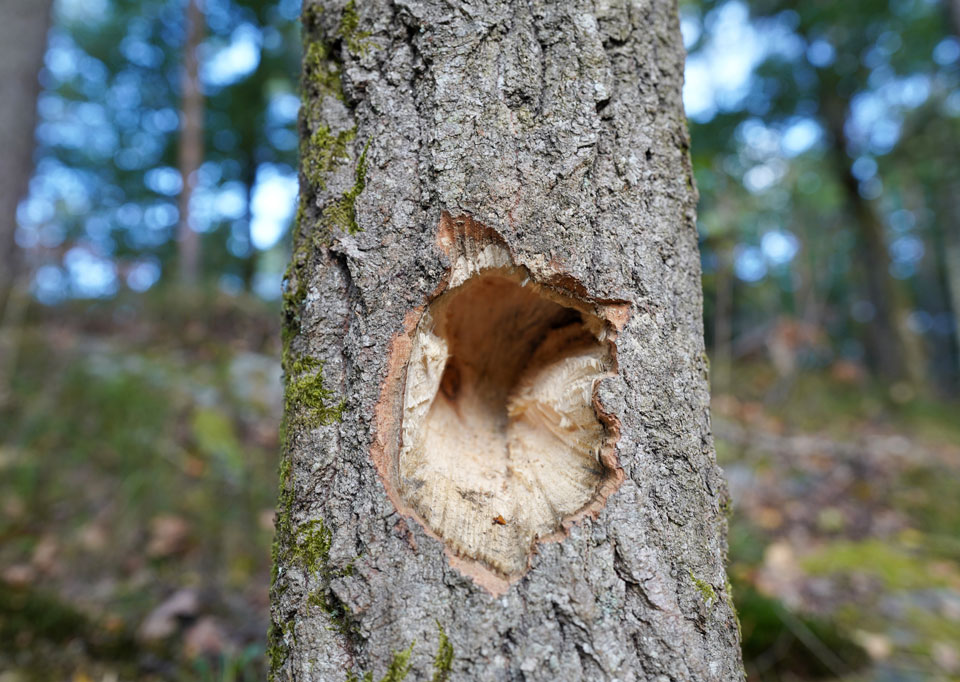
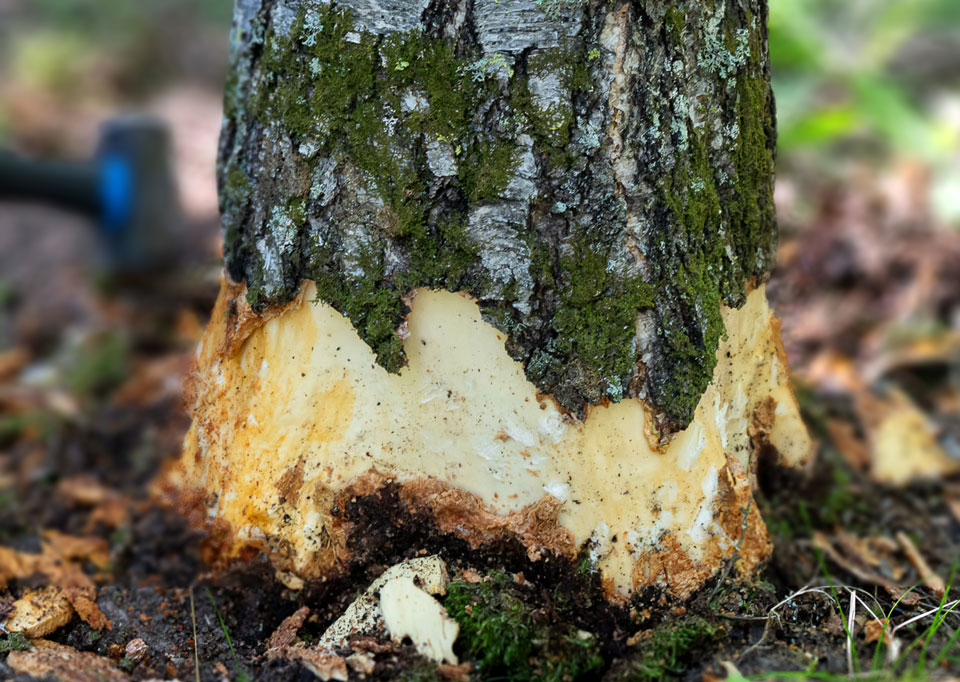
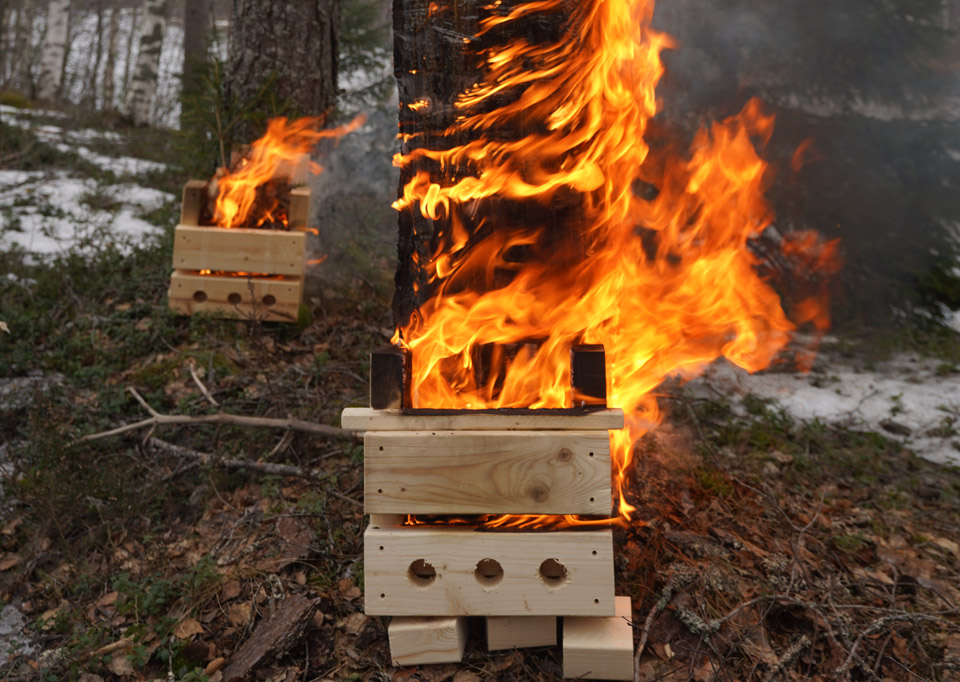
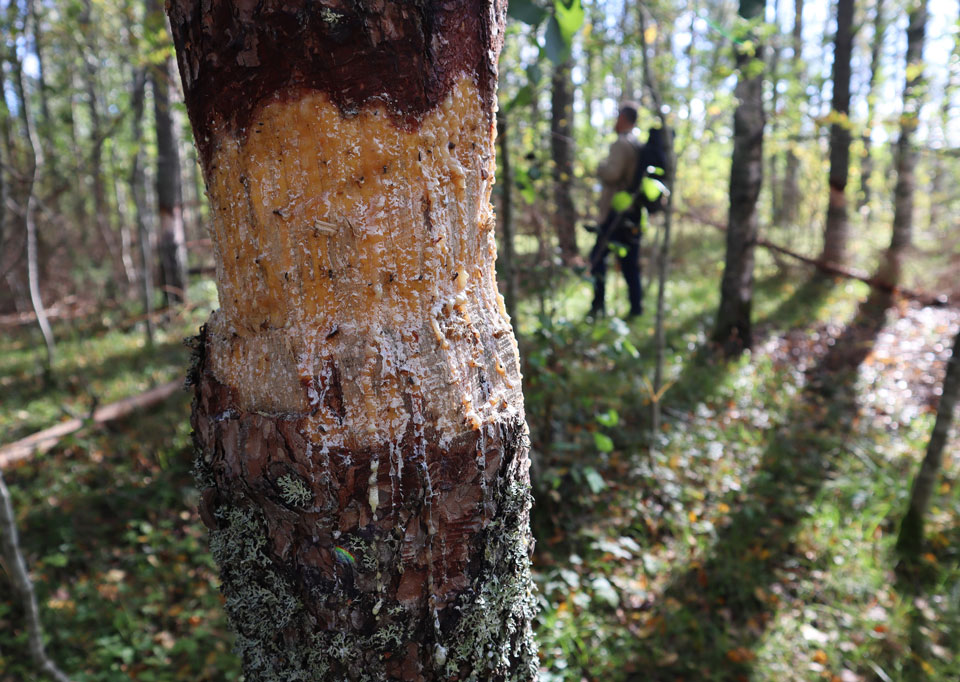
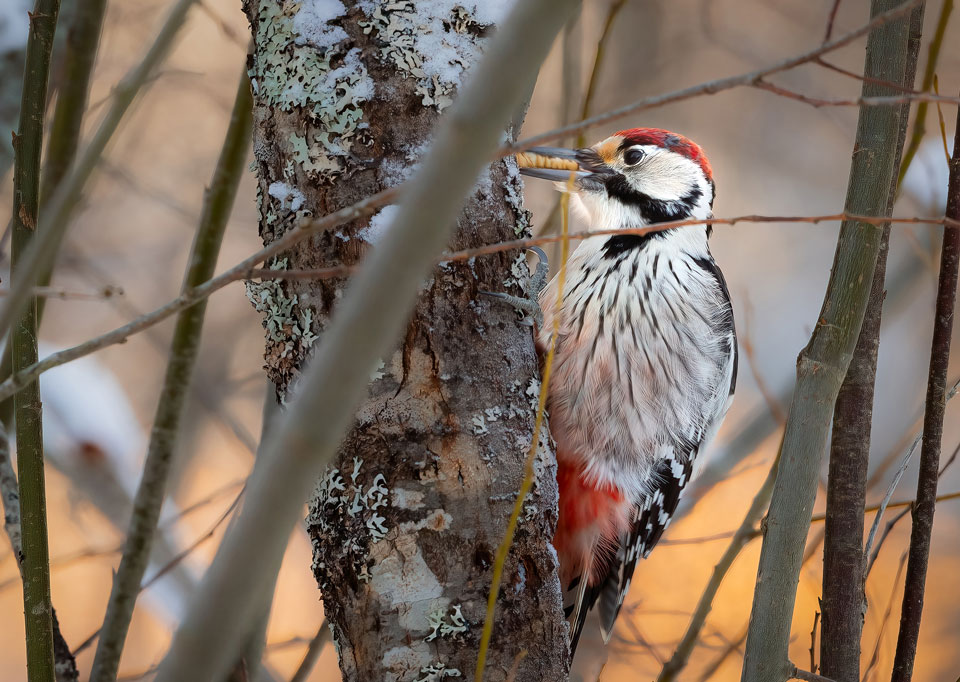
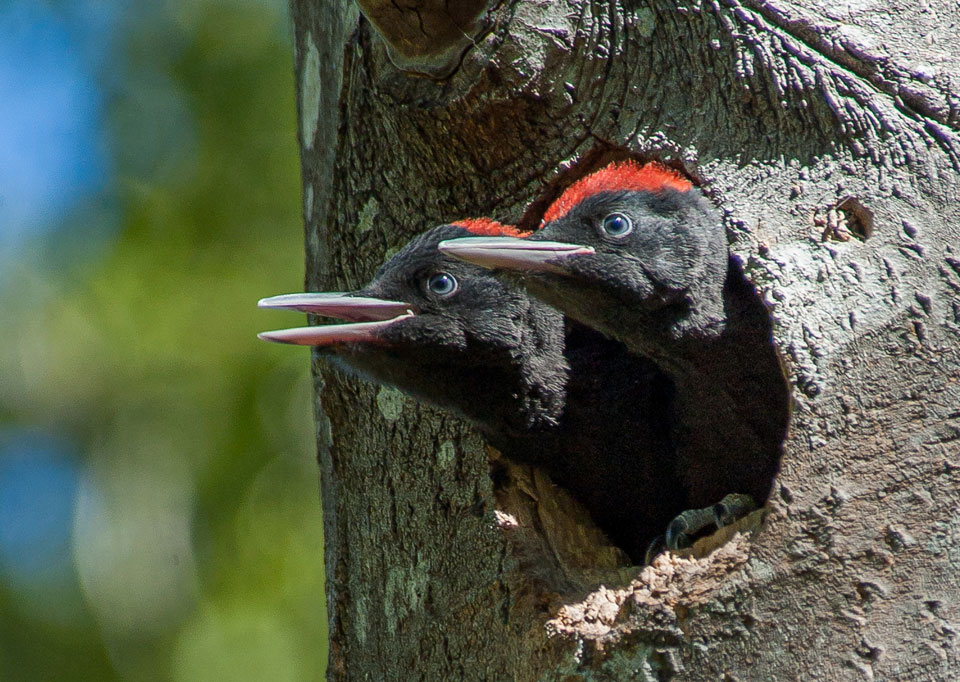
Planted forests lack the natural age variation of wild woodlands. Through “veteranisation” – inducing damage by breaking branches, scarring bark, or creating fire scars – we mimic natural disturbances, creating conditions for wood-decaying fungi to colonize. This, in turn, attracts wood-living insects and cavity-nesting birds, like the White-Backed Woodpecker, that feed on their larvae.
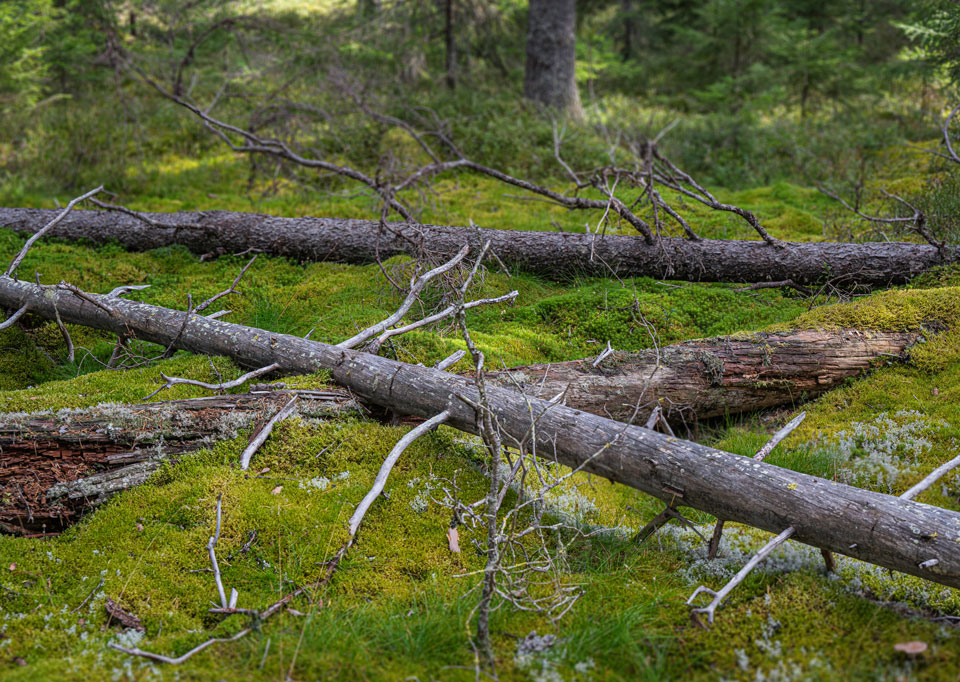
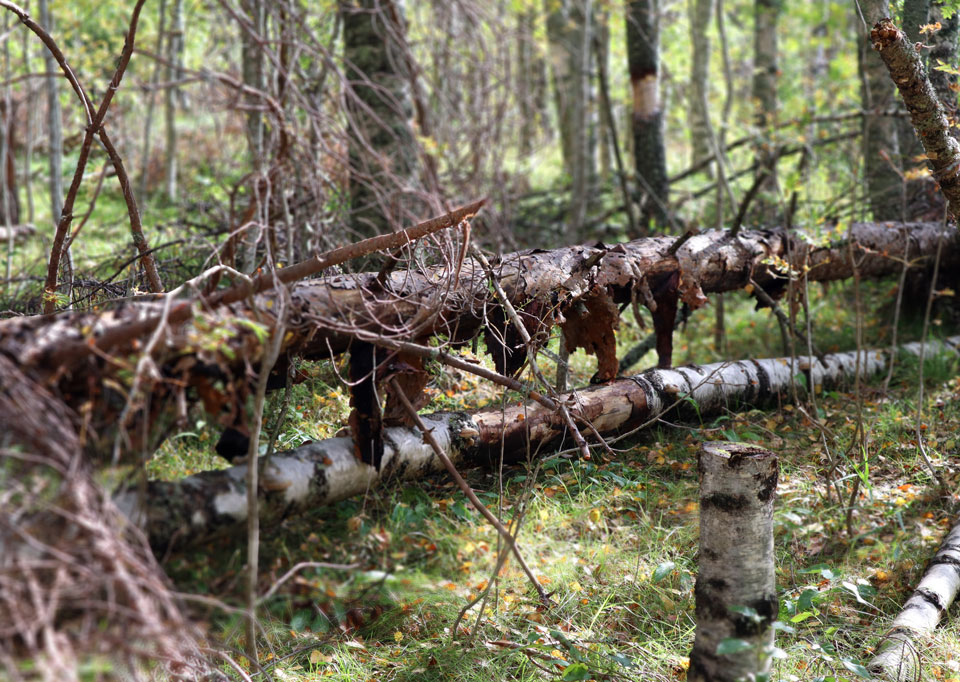
Damaged trees, now functioning as much older ones, die gradually, eventually contributing to coarse woody debris (CWD), which is essential for biodiversity, providing food and shelter for countless species. Accelerating decay processes and increasing structural variation restore complexity, enhancing resilience, biodiversity, and ecosystem functions.
#3: Thinning uniform forests to create space for biodiversity
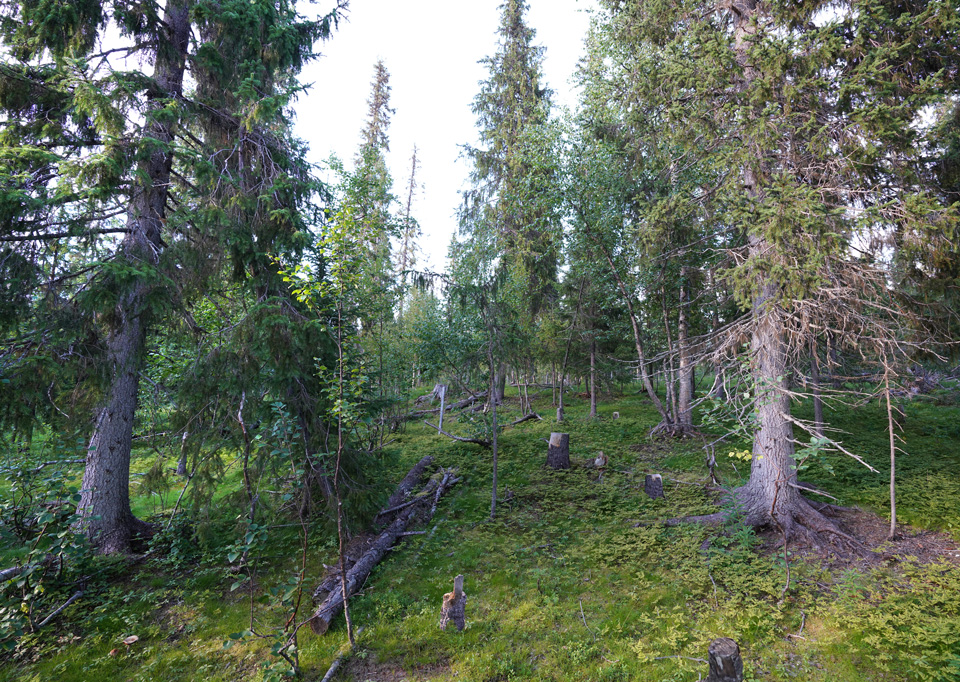
In planted conifer production forests, densely packed, same-aged trees often prevent other species from establishing and thriving. One way to increase diversity is through selective thinning, creating glades that provide space for other vegetation. As deciduous trees are allowed to grow larger, and when ground lichens, shrubs, and flowering plants return the entire food web benefits – from pollinators to bears feeding on blueberries and herbivores like reindeer. Biodiversity increases and the forest becomes more resilient A more open forest structure also improves soil moisture retention and strengthens overall ecosystem health. Rewilding Sweden has carried out selective thinning in multiple locations across the Nordic Taiga, creating diverse habitats for plants and wildlife.
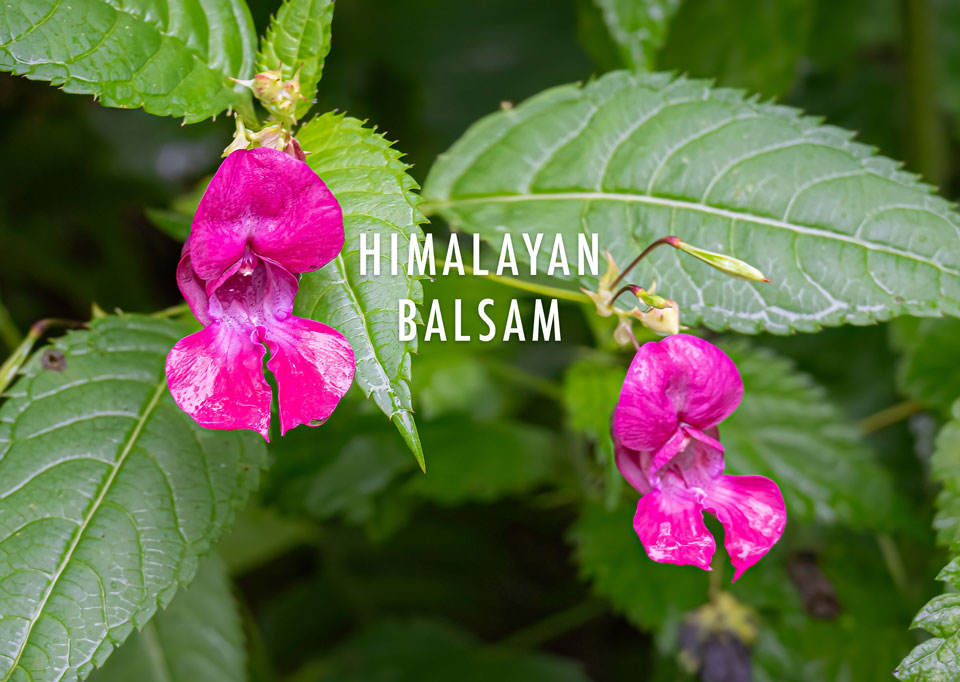
#4: Removal of invasive vegetation
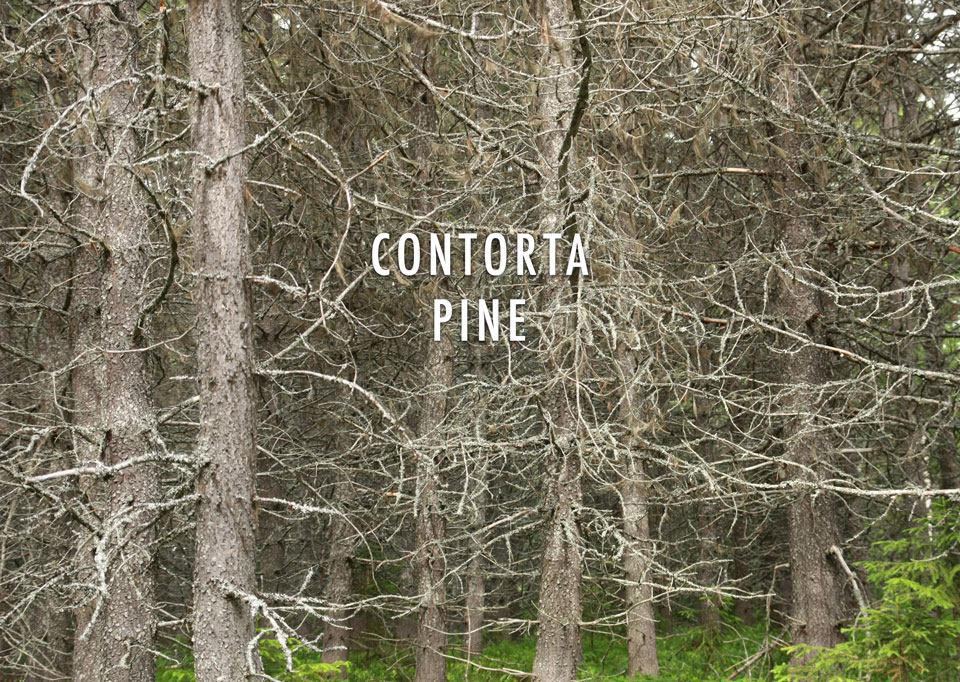
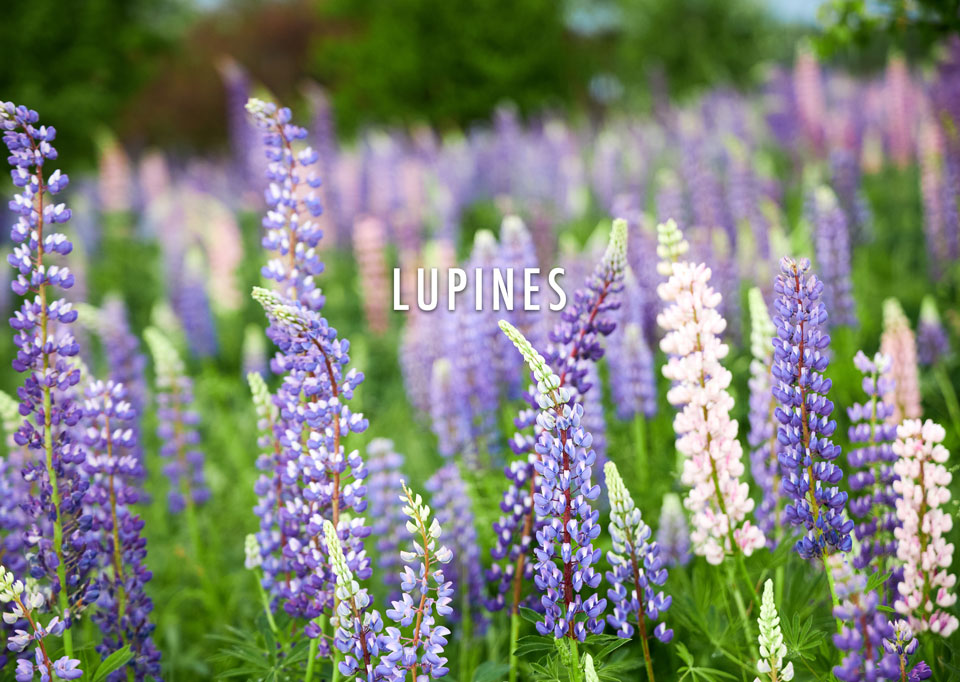
Introduced species like Contorta pine, Lupines and Himalayan balsam outcompete native vegetation and reduce biodiversity in Nordic Taiga forests. The Contorta pine form dense stands that suppress understory growth, reduce biodiversity and restrict movement of large animals like reindeer. Lupines outcompete native flora by fixing excessive nitrogen in the soil, displacing species adapted to natural nutrient-poor boreal conditions. Himalayan balsam spreads aggressively, shading out native plants, depleting pollinators’ attention, and leaving soil vulnerable to erosion when its shallow-rooted stands die back in winter.
Removing invasive vegetation and preventing their return is challenging, often requiring large-scale interventions like clear-cutting and root pulling. While this creates space for native species to regenerate naturally, additional planting is sometimes needed to accelerate recovery. Controlling invasives is essential to rewilding forests and restoring their natural functions.
#5: Facilitate deciduous tree comeback
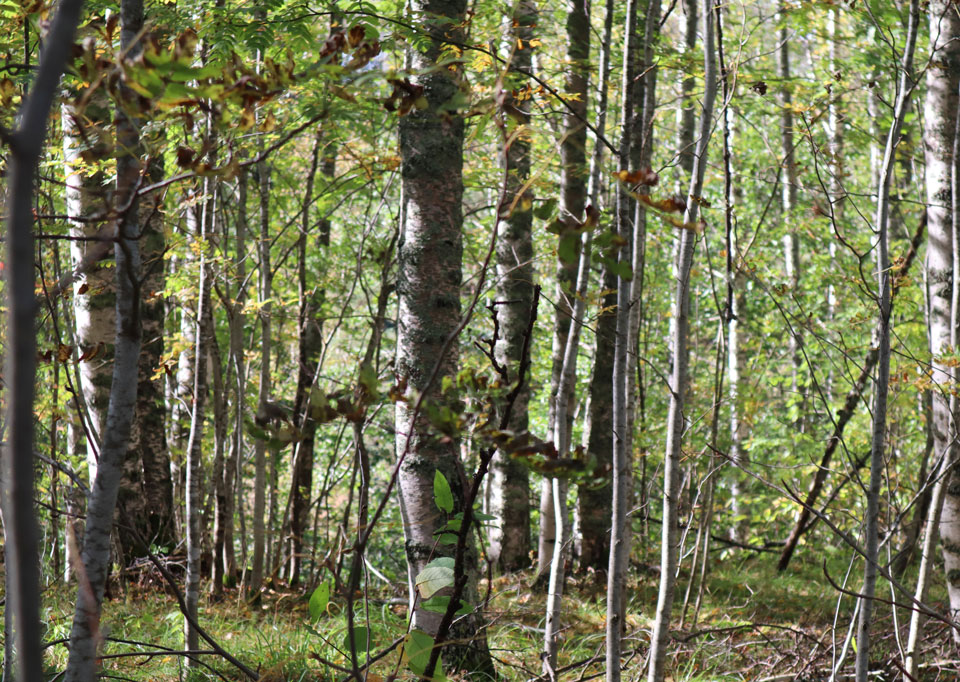
Forestry has largely replaced mixed woodlands with conifer monocultures. Encouraging the return of birch, aspen, and rowan restores diversity, supporting a wide range of insects, birds, and mammals. To boost these broad-leaved species, we use measures such as conifer thinning and ground rewetting.
Deciduous trees provide habitats and food for insects and birds, improve soil health, reduce drought and fire risks, and supply streams and rivers with crucial energy input through autumn leaf fall. They also create greater habitat variation, making forests richer, more resilient, and more self-sustaining.
#6: Connecting fragmented habitats
Viewing rewilding as a complementary conservation strategy, we focus on reconnecting fragmented landscapes between already healthy ecosystems. Clear-cutting and damming have broken forests and rivers into isolated patches, making it harder for plants to disperse naturally and for wildlife to migrate, find food, and maintain genetic diversity.
Establishing ecological corridors in water and on land – so-called ‘blue-green corridors’ – involves protecting and restoring riparian zones, removing dams, reconnecting hydrological flows, linking old-growth areas, and rehabilitating degraded land. These efforts create pathways for vegetation to spread naturally and for animals to move freely. A connected landscape supports healthier populations, strengthens ecosystems, and enhances climate resilience.
#7. Accelerating rewilding with moss reintroduction
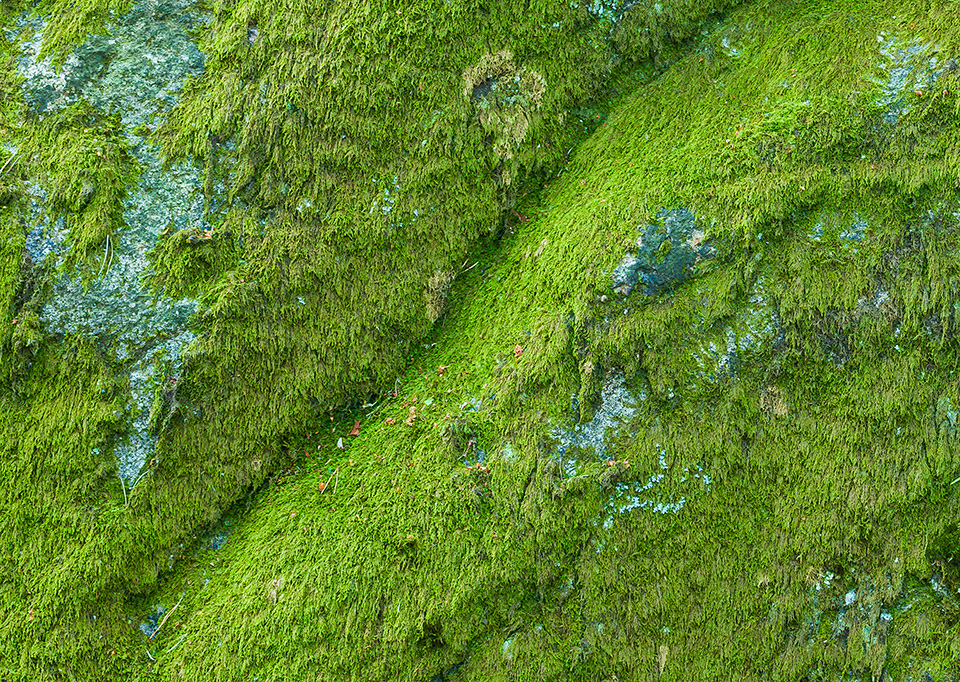
Reintroducing mosses on barren ground – such as abandoned mines, gravel pits, exposed rock, or stones in restored rivers – can boost ecological recovery. Unlike other plants, mosses don’t need soil to grow. They absorb moisture and nutrients from rain and air, allowing them to colonize even the harshest, lifeless surfaces. As mosses grow and decompose, they gradually build organic matter, forming the first fragile layer of soil. This traps moisture, moderates temperature, and supports microbial life – creating conditions for other plants to take root and biodiversity to return. Moss carpets also reduce erosion and retain humidity, stabilizing tough microclimates. In northern boreal ecosystems, where recovery is slow, mosses act as quiet pioneers – laying the groundwork for rewilding to begin.
Rewilding Sweden works with leading moss scientists on re-mossing efforts. By seeding these early colonizers, we help nature bounce back and give life a foothold where it was once stripped away.
#8: Adapt a holistic waterscape approach to rewilding
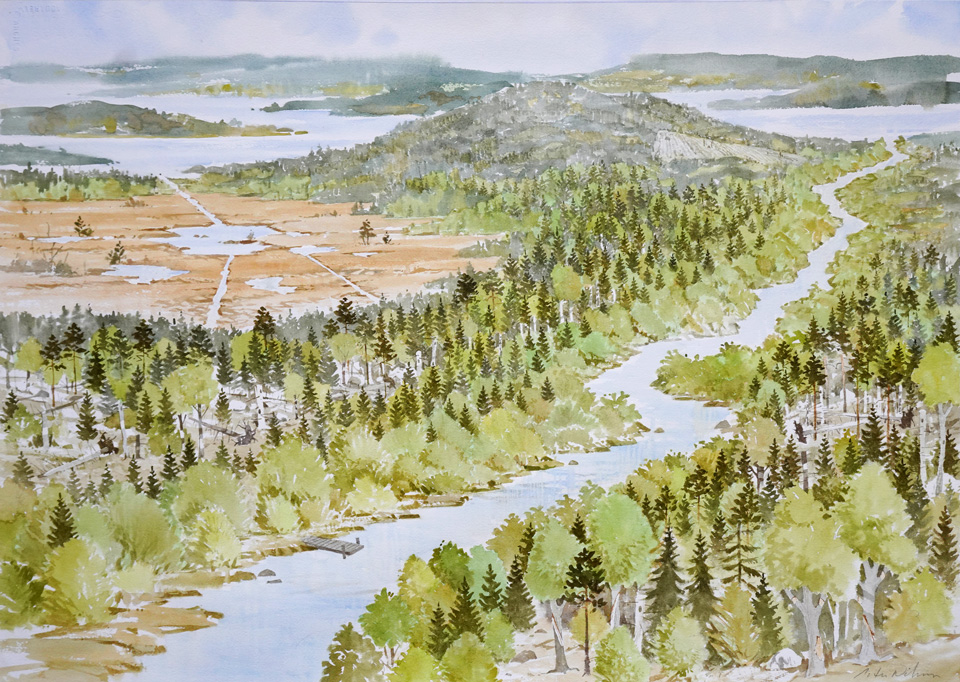
Rewilding is not about isolated actions – it’s about restoring entire ecosystems and the processes that sustain them. A holistic waterscape approach ensures that forests, water, wildlife, and soil processes interact to create thriving, self-sustaining environments. Instead of focusing on single species, we restore the natural dynamics that drive biodiversity, regenerate forests, and enhance ecosystem stability.
Many of the forest landscapes we focus on play a crucial role in species migration and dispersal. Ultimately, when we restore waterscape processes, nature takes over and rewilds itself.