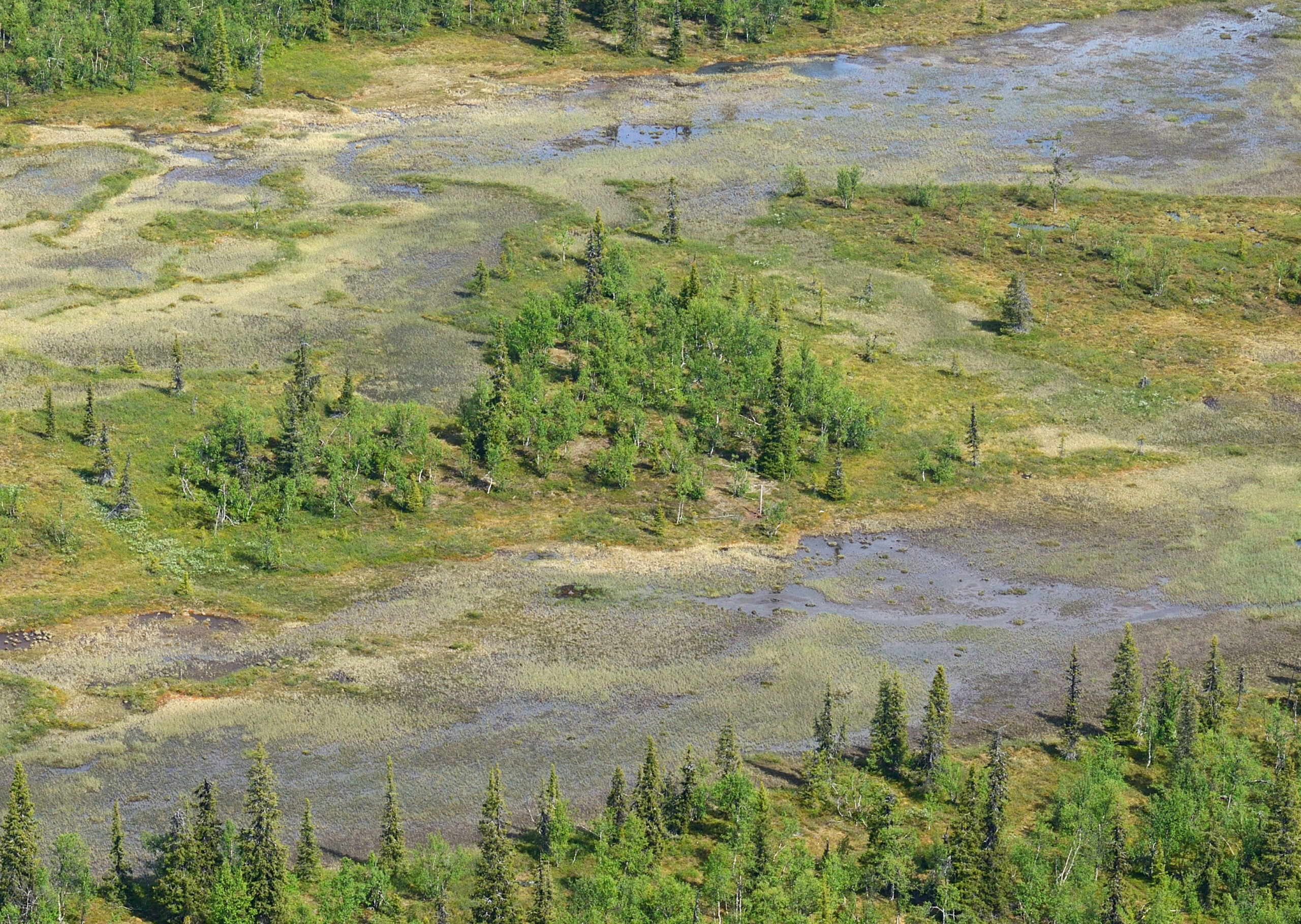

In the Nordic taiga, we work to restore wetlands’ natural water-retaining function. By blocking ditches and increasing soil water saturation, we slow runoff, store carbon, purify water, and create habitats for species that depend on wet, living landscapes.
How we rewild the taiga’s wetlands
Wetlands are among the most life-giving habitats in the Nordic Taiga. They retain water in the landscape, regulate flows, purify water before it reaches streams and rivers, and create habitats for a great diversity of species. At the same time, water-saturated wetlands bind and store large amounts of carbon in the soil. Here, forest, water, and open mire landscapes meet in transition zones that are important for everything from mosses, insects, and amphibians to birds, moose, and reindeer.
In our work with wilder wetlands, we start from the hydrology of the landscape. By slowing the water down, rewetting drained land, and restoring natural water flows, we strengthen the ecological function of wetlands. When water is once again allowed to move more slowly through the landscape, the leakage of particles, humus, and nutrients into streams and rivers is reduced, while habitats are recreated for species that depend on moist, water-saturated, and varied environments.
Wetland restoration is therefore not an isolated measure, but part of a larger waterscapes. A restored wetland can improve water quality in a downstream river, strengthen the forest’s resilience to drought, and create important dispersal routes between aquatic and terrestrial habitats. In this way, wetlands contribute to stronger blue-green connectivity and more self-sustaining ecosystems.

The general challenges
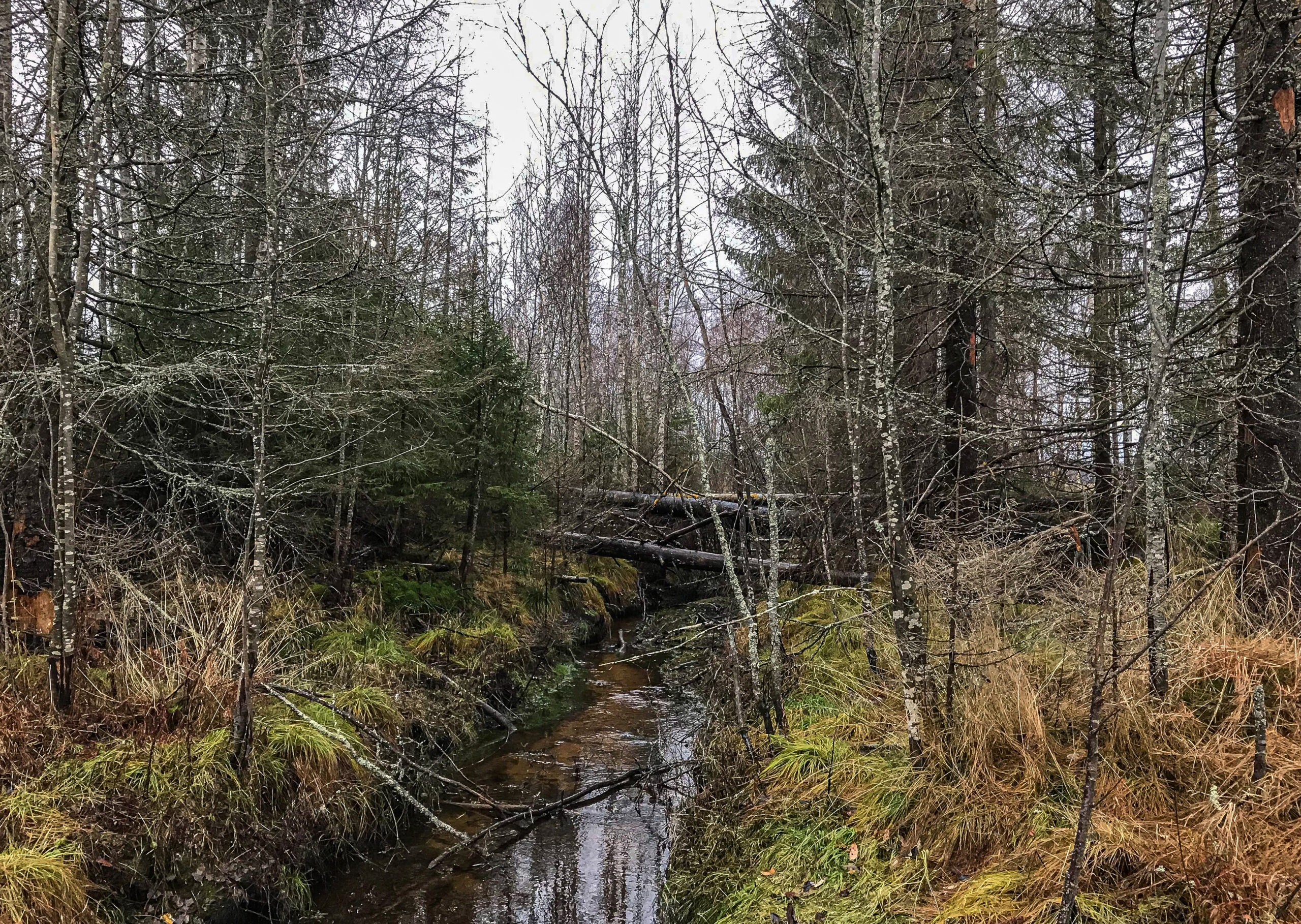
Many of the Nordic taiga’s wetlands have been drained to create production forests, often on land where the forest never really took off. The result was instead drier mires, altered vegetation, and weakened habitats for wetland-dependent species. When water is quickly carried away through ditches, particles, humus, and nutrients are transported into streams and rivers, which can reduce water quality and affect life downstream. At the same time, species and ecological functions linked to wet habitats are affected, from sphagnum mosses, sedges, and insects to amphibians, birds, reindeer, and moose that use wetlands for grazing, shelter, and cooling.
Solutions
We restore wetlands by restoring their hydrology. This can involve filling in or damming ditches, slowing water flows, and recreating the water saturation that wetland species and processes depend on. When water stays in the landscape for longer, wetlands regain their function as natural filters, while habitats for mosses, vascular plants, insects, birds, and grazing animals are strengthened. Restoration also helps reduce leakage into streams and rivers, increase the landscape’s resilience to drought and flooding, and, as an important follow-on effect, preserve more carbon in the soil.